

 Spanish
 Italian
 French
 Russian
 Japanese
 Korean
 Mandarin Simplified
 Mandarin Traditional
 Vietnamese
 Cantonese
 Shanghainese
 Taiwanese
How to Order Food in Japanese | Essential Phrases & Tips
Itadakimasu! Understanding How to Order Food in Japanese

One of the biggest joys of learning about foreign cultures is undoubtedly food!
When travelling or living in Japan, the skill of ordering food is extremely important. Being able to order in Japanese will make for a much smoother experience.
This guide introduces some useful words, phrases and cultural points to keep in mind when dining out.
How to Order Food in Japanese || Choose Restaurants
How to Order Food in Japanese || How to Enter a Restaurant
How to Order Food in Japanese || How to Order Food
How to Order Food in Japanese || After the Meal
How to Order Food in Japanese || FAQs

How to Order Food in Japanese || Choose Restaurants
Choosing a restaurant is very important. Some restaurants don’t offer English menu cards. There may not be staff who speak English. Maybe you have allergies, or you have religious reasons for not being able to eat certain foods.
Nowadays, there are many restaurants that post photos of their food on Instagram or have helpful reviews on Google Maps. If you are not confident in your Japanese and find it difficult to ask a store clerk on the spot, it is a good idea to do some research beforehand.
Restaurants that come up when searching in English are likely to have many foreign tourists visiting, so there is a good chance that they are accustomed to providing such services.
The typical serving format in a Japanese restaurant is a teishoku (定食 ていしょく ) or don (丼 どん ) meal.
Teishoku is a set meal consisting of rice and miso soup, along with a main dish and pickles.
焼き魚定食
やきざかなていしょくYaki-zakana teishoku…
Rice, miso soup, grilled fish (various types) and small side dishes(pickles, etc.)
野菜炒め定食
やさいいためていしょくYasai-itame teishoku…
Rice, miso soup, stir-fried vegetables, and small side dishes.
からあげ定食
からあげていしょくKara-age teishoku…
Rice, miso soup, fried chicken and small side dishes.
Most restaurants that have teishoku 定食 ていしょく on the menu or a banner in front of the store saying teishoku offer these types of set meals. In most cases, you can choose the size of your bowl of rice.
| JAPANESE | ROMAJI | ENGLISH MEANING |
| 少なめ すくなめ | sukuname | A small bowl of rice |
| ふつう | futsuu | Usual size at that restaurant |
| 大盛り おおもり | oomori | Larger amount of rice |
丼 どん don is a meal consisting of rice topped with a variety of side dishes. Don often comes with miso soup and pickles.

カツ丼
カツどんKatsu-don
A rice bowl topped with fried pork cutlet
海鮮丼
かいせんどんKaisen-don
A rice bowl topped with various sashimi
うな丼
うなどんUna-don
A rice bowl topped with eel

Discover Tokyo // A Beginners Guide to Tokyo (Food, Transport + More)
Tokyo is an ideal destination for a trip, but you need to be well prepared. We’ve put together a guide to everything you need to know before you go to Tokyo.
How to Order Food in Japanese || How to Enter a Restaurant
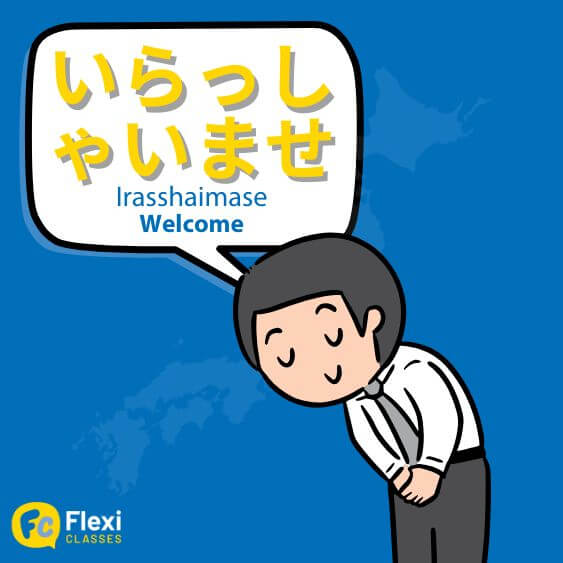
Once you have decided which restaurant to go to, how do you enter the restaurant?
In Japan, when you enter a restaurant, the waiter will say:
いらっしゃいませ!irasshaimase!
Welcome!
This is a greeting that basically means “welcome” and a slight bow is enough to respond.
After that, it is common for the waiter to ask if you have a reservation and how many people are in the group, as follows:
ご予約はございますか?
ごよやくはございますか?Go-yoyaku wa gozaimasuka?
Do you have a reservation?
何名様ですか?
なんめいさまですか?Nanmeisama desuka?
How many people?
おたばこは吸われますか?
おたばこはすわれますか?Otabako wa suwaremasuka?
Do you smoke?
If you have a reservation, you can say:
5時に予約のスミスです。
ごじによやくのスミスです。Gojini yoyaku no Sumisu desu.
This is Smith with an appointment at 5 o’clock.
If you don’t have a reservation:
予約はないです。3名で席は空いてますか?禁煙席をお願いします。
よやくはないです。3めいでせきはあいてますか?きんえんせきをおねがいします。Yoyaku wa naidesu. Sanmei de seki wa aitemasuka? Kin-en seki wo onegai shimasu.
We don’t have a reservation. Are there any tables available for three? We would like a table in a non-smoking area.
If you smoke:
喫煙席をお願いします。
きつえんせきをおねがいします。Kitsuen-seki wo onegai shimasu.
We would like a table in a smoking area.
If the restaurant is full:
すみません、ただいま満席でございます。
すみません、ただいままんせきでございます。Sumimasen, tadaima manseki de gozaimasu.
Sorry, we are currently fully booked.
How to Order Food in Japanese || How to Order Food
If you have a reservation or if there are vacant seats, you will be seated. Once you sit down, you will be given water and a menu.
In Japanese restaurants, water or tea are provided free of charge, so you don’t have to worry.
If you need an English menu, you can say:

英語のメニューはありますか?
えいごのメニューはありますか?Eigo no menyu wa arimasuka?
Do you have an English menu?
商品の写真はありますか?
しょうひんのしゃしんはありますか?Shouhin no shashin wa arimasuka?
Do you have any product photos?
おすすめはありますか?
Osusume wa arimasuka?
Do you have any recommendations?
After a while, a waiter will come to take your order. If a waiter doesn’t come, it is not rude to call out “sumimasen.
ご注文はお決まりでしょうか?
Have you decided what to order?からあげ定食を三つ、大盛りで
Three large fried chicken set meals.When ordering, simply say ひとつ hitotsu or ふたつ futatsu in addition to the product name.
If you don’t know the correct name of product, point to the picture of menu and say:
これをひとつ。
I’ll take this oneAdding kudasai ください will make it more polite.
これをひとつください。
I’d like one of this, please.からあげふたつください。
Kara-age futatsu kudasai.
I’d like two pieces of fried chicken, please.
In Japanese ramen shops and restaurants with set meal menus, it is common to use a food ticket machine to order. You press the button for the dish you want at the machine near the entrance, buy a ticket, and then hand it over to the waiter.
どうやって使うのですか?
どうやってつかうのですか?Douyatte tsukaunodesuka?
How can I use this machine?
このボタンは何ですか?
このボタンはなんですか?Kono botan wa nandesuka?
What is this button?
If you need to make special requests, here are some useful phrases:
〜はなしでお願いします。
〜はなしでおねがいします。wa nashi de onegaisimasu.
No ~, please.
ナイフとフォークはありますか?
Naifu to fo-ku wa arimasuka?
Do you have knives and forks?
おてふきをください。
Otefuki wo kudasai.
Can I have some hand wipes, please?
If you like something and would like to order more, you can say:
これをもうひとつください。
Kore wo mouhitotsu kudasai.
Can I have one more of these please?
ごはんのおかわりをください。
Gohan no okawari wo kudasai.
Can I have some more rice, please?
There are some restaurants that offer free refills of rice and miso soup (おかわり無料 おかわりむりょう okawari muryou).
Coffee in Japanese // A Complete Guide to Ordering WITH Audio
Once you learn the names of the various types of coffee in Japanese, ordering a cup won’t be too much trouble. Check out structures and examples.
How to Order Food in Japanese || After the Meal
Once you’ve finished your meal, it’s time to pay.

お会計お願いします。
おかいけいおねがいします。Okaikei onegai shimasu.
Check, please.
このクーポンは使えますか?
このクーポンはつかえますか?Kono ku-pon wa tsukaemasuka?
Can I use this coupon?
クレジットカードでお願いします。
クレジットカードでおねがいします。Kurejitto ka-do de onegai shimasu.
I would like to pay by credit card.
Some restaurants in Japan only accept cash, so it’s always good to have some on hand.
There is no need to tip. Simply pay the amount shown on the bill. Once you have paid the bill, say ごちそうさまでした gochisousama deshita and leave.
Ordering food in Japan may seem intimidating at first, but with these key phrases, you’ll be able to navigate any restaurant with ease. Enjoy your dining experience in Japan!
That’s all for this article. What is your favorite food in Japan? Share with us in the comments!
How to Order Food in Japanese || FAQs
What is the most common way to say “I’d like to order” in Japanese?
A polite and common way is 「~をお願いします」(~ o onegaishimasu), which means “I’d like [item], please.” You can also say 「注文いいですか?」(chūmon ii desu ka?) to ask, “Can I order?”
Do I need to speak fluent Japanese to order food in Japan?
Not at all! Learning a few basic phrases and being polite goes a long way. Many restaurants have picture menus or even vending machine ordering systems to make it easier for non-native speakers.
How do I ask for the menu in Japanese?
You can say 「メニューをください」(menyū o kudasai) which means “Can I have the menu, please?” Most restaurants will understand “menu” as-is since it’s a loanword in Japanese.
How do I ask for an English menu in Japanese?
英語のメニューはありますか?
えいごのメニューはありますか?Eigo no menyu wa arimasuka?
Do you have an English menu?
What’s the polite way to call a waiter or waitress in Japan?
Simply raise your hand slightly and say 「すみません」(sumimasen), which means “Excuse me.” It’s polite and commonly used in restaurants to get the staff’s attention.
What is teishoku?
A teishoku(定食 ていしょく ) is a set meal consisting of rice, miso soup, a main dish and small side dishes. There are a variety of main dishes available, and if you’re not sure what to order, “teishoku” is large enough to serve as a full meal.
Do I need to tip after I finish eating in Japan?
No. Tipping is not a custom in Japan. Just pay the amount shown on the bill.
What should I say when I finish eating and leave?
In Japanese, you should say ごちそうさまでした gochisousama deshita when you finish eating. You can say this a few times: when you have finished eating and when you leave a restaurant.
Want More From LTL?
WANT TO LEARN JAPANESE? Check out our online Japanese courses here.
We offer a 7-day free trial to all new students where you can study 24/7.
What about studying Japanese in Japan instead? We’ve got your back. Our Japanese courses in Tokyo can either be taken in small groups of no more than 5 students or individually for a more tailored experience.
We even offer incredible homestay experiences in Tokyo as well.
Come and be a part of this amazing community.