

 Spanish
 Italian
 French
 Russian
 Japanese
 Mandarin Simplified
 Mandarin Traditional
 Vietnamese
 Cantonese
 Shanghainese
 Taiwanese
How to Say Friend in Chinese: Key Vocab, Slang and Idioms
Discover the diverse ways to say ‘friend’ in Chinese and how to use them in your daily conversations.
Quick answer: The standard word for “friend” in Chinese is 朋友 (péngyǒu), and “friendship” is 友谊 (yǒuyì). Beyond the basics, Mandarin has a rich set of terms for different kinds of friends: 好朋友 (hǎo péngyǒu) for a good friend, 闺蜜 (guī mì) for a female best friend, 哥们儿 (gē men er) or 兄弟 (xiōng dì) for close male friends, 死党 (sǐ dǎng) for a ride-or-die bestie, 知己 (zhī jǐ) for a soulmate-level friend, 发小 (fà xiǎo) for a childhood friend, and 老铁 (lǎo tiě) as northeastern slang for a trusted buddy. This guide walks through each term, its register, and when to use it.
Friendship is an important part of life, and if you’re learning Chinese, knowing how to talk about friends is essential.
The most common word for “friend” in Chinese is 朋友 (péngyǒu) and “friendship” is 友谊 (yǒuyì), but there’s much more to it than just these basic terms. If you’re just getting started with Mandarin, it’s worth understanding what will be your challenge, what’s not before diving into slang.

Depending on the context, relationship, and even regional slang, different words and expressions can be used to describe friendships.
In this blog, we’ll start with the fundamental vocabulary for “friend” in Chinese before exploring informal and slang terms used in everyday conversation. We’ll also look at idioms and expressions about friendship.
Whether you’re making a new friend, talking about a close bond, or expressing appreciation for a lifelong companion, this guide will help you find the right words.
Informal and Slang Terms for Friend
Idioms and Expressions Involving Friendship
How to Talk About Friendship in Different Situations

Friend in Chinese || Basic Words for Friend
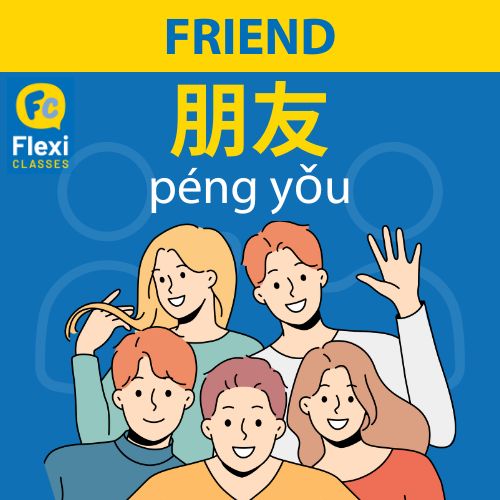
First, here are some basic words to refer to friends in almost daily conversation.
朋友
péng yǒu
The standard word for “friend”
You can use this word everywhere when introducing a new friend in almost all contexts. Here is an example:
他是我的朋友。
tā shì wǒ de péng yǒu
He is my friend.
好朋友hǎo péng yǒu
Good friend
This word is used to describe a close or good friend in casual settings.

For example, when talking about a close friend, you can say:
她是我最好的朋友。
She is my best friend.Now, for someone that you don’t really feel is as close to a friend yet, but you still know each other, here’s the word for that.
熟人
Acquaintances同学
tóng xué
Classmate
Even though 同学 (tóng xué) is a word you use to refer to a classmate in school, it also becomes an endearing nickname for calling your friends.
Now in China, people assume that those in school would be more trustworthy and friendly, so 同学 (tóng xué) shows a level of intimacy and trust.
If you try to approach someone friendly, you can always refer to someone as 同学.
知己zhī jǐ
Soulmate friend / someone who truly knows you
知己 (zhījǐ) describes a friend who understands you on a deep level: your thoughts, your values, your unspoken feelings. It carries a literary weight, appearing in classical poetry and modern speech alike. If 朋友 is a friend, 知己 is the rare one who really gets you.
For example:
人生得一知己,足矣。
rén shēng dé yī zhī jǐ, zú yǐ
To find one true friend in a lifetime is enough.
发小
fà xiǎo
Childhood friend
发小 (fàxiǎo) refers to someone you grew up with from a very early age, often in the same neighborhood or compound. The bond is built on shared memories before either of you can really remember, which makes it one of the hardest friendships to replicate as an adult.
For example:
我们是发小,从小一起长大的。
wǒ men shì fàxiǎo, cóng xiǎo yī qǐ zhǎng dà de
We are childhood friends who grew up together.
More ways to say ‘friend’ in Chinese
| Chinese | Pinyin | Meaning | When to use it |
|---|---|---|---|
| 至交 | zhìjiāo | Closest, most intimate friend | Formal or literary; reserved for one or two people in a lifetime |
| 挚友 | zhìyǒu | Devoted, bosom friend | Written Chinese, heartfelt messages, formal toasts |
| 老友 / 老朋友 | lǎo yǒu / lǎo péngyǒu | Old friend / long-time buddy | Warm, nostalgic; works in speech and writing |
| 好友 | hǎoyǒu | Good friend (also: contacts on social apps) | Everyday speech and social media (WeChat, Weibo) |
Friend in Chinese || Informal and Slang Terms for Friend
Besides the standard term for friends, there are some informal and interesting slang in different parts of China that people have invented for nicknames to call each other. Once you know these, you’ll be ready for playful phrases between close friends too.
死党
BestieThis is the slang term that younger people use to refer to their best friends, it’s like your ‘ride or die’ in English.
When you grow up, you always have someone who grew up with you and you two are almost inseparable and incredibly close. That is your 死党 (sǐ dǎng)
For example:

我和他是死党。wǒ hé tā shì sǐ dǎng
He and I are besties.
哥们儿gē men er
Brother/Bro
哥们儿
BroJust like how you use “bro” to refer to a close male friend, 哥们儿 gē men er is a casual and informal way for Chinese to call their male friends. For example:
我们哥们儿一起去吃饭吧。
wǒ men gē men er yī qǐ qù chī fàn ba
Come on, bros, let’s go eat.
闺蜜
Bestie (female best friend)
闺蜜
guī mì
Female best friend
And the equivalent for female close friends is called 闺蜜 guī mì. The younger girls love to call their best friends in this way to show their intimacy and close friendship.
Usually, the friendship would last a long time to be qualified as 闺蜜 guī mì. For example:
我们是十年的闺蜜了。
We’ve been best friends for 10 years.她是我最好的闺蜜,什么事都跟她说。
tā shì wǒ zuì hǎo de guī mì, shén me shì dōu gēn tā shuō
She’s my best girlfriend, I tell her everything.
姐妹
Sisters / girl squad姐妹
jiě mèi
Sisters / girl squad
姐妹 (jiěmèi) literally means ‘older and younger sister’ but in everyday use it’s what you call your close female friends as a group: your crew, your squad. It’s warm, inclusive, and shows solidarity. You’ll hear it constantly in Chinese dramas and group chats.
For example:
我和我的姐妹们今晚出去玩。
wǒ hé wǒ de jiě mèi men jīn wǎn chū qù wán
My girls and I are going out tonight.
兄弟
BrotherThis word has a similar meaning with 哥们儿 gē men er. But besides referring to close male friends, the word emphasizes strong brotherhood and loyalty to the friendship.
For example:
我们是兄弟
wǒ men shì xiōng dì
We’re brothers.
In northern China, this word is also commonly used to refer to any male you see on the street when you try to approach someone as friendly.
老铁
Another way for BroThis is modern slang that originated in northeastern China (东北, Dōngběi) and spread nationwide through internet culture and short-video platforms. It is used between close, trusted friends, mostly males.
The term carries a connotation of reliability and loyalty: calling someone 老铁 signals you genuinely have their back.
Regional note: 哥们儿 is also rooted in Beijing and northern dialect, with the 儿-suffix (erhua) being a classic northern speech feature. 兄弟, while used nationwide, takes on its strongest brotherly-loyalty flavor in northern and northeastern speech.
老铁,帮个忙吧。
lǎo tiě, bāng gè máng ba
Bro, help me out.

Your Ultimate Guide: Key Phrases For Business Trips in China ✈️
Want a Stress-Free Business Trip? Learn Key Phrases for Booking Flights, Hotels, and Transportation in Chinese Travelling for business in China can be both exciting and challenging. Even though it’s becoming more common for the staff to speak English in…
Friend in Chinese || Idioms and Expressions Involving Friendship
Friendship has been an ever-lasting topic over China’s long history. So there are a lot of ancient idioms and expressions referring to strong friendship and how people appreciate it.
情同手足
As close as one’s hands and feetThis word literally means that friendship is like your hands and feet. It describes a friendship as close as siblings, with strong affection and loyalty for each other.
For example, you may often hear people say:
兄弟情谊情同手足xiōng dì qíng yì qíng tóng shǒu zú
The brotherhood is as close and inseparable as our hands and foot.
志同道合
Like-minded (idiom)Can you remember how your friendship usually developed? It usually comes from a common interest or aspiration. Or as we typically call it, like-minded people.
我们是志同道合的朋友。wǒ men shì zhì tóng dào hé de péng yǒu
We are like-minded friends who share the same values.
肝胆相照
The liver and the gut correspond to each other. (idiom)This idiom means that the liver and the gut correspond to each other.
It describes a friendship in which both people trust each other completely and are always open with one another.
For example:
我们是肝胆相照的好朋友。wǒ men shì gān dǎn xiāng zhào de hǎo péng yǒu
We are close friends who trust each other completely.
生死之交
Friendship of life and death (idiom)Now, this word just levels up the friendship to the ultimate level.
The word describes that your friendship has been forged through life-and-death situations. So it is an extremely loyal friendship where you can rely on each other in any challenging times.
Friend in Chinese || How to Talk About Friendship in Different Situations
As the level of friendship deepens, there are different words to refer to. The Chinese language has a vast vocabulary to refer to friends in many specific contexts.

酒肉朋友jiǔ ròu péng yǒu
Drinking buddy/ Fair-weather friends
What about a friend that you always hang out with at parties but you never trusted to ask for a favor?
Now that is a 酒肉朋友 jiǔ ròu péng yǒu, who only sticks around for good times but is never by your side during difficult times.
他不过是个酒肉朋友,遇到事儿就不见了。tā bú guò shì gè jiǔ ròu péng yǒu, yù dào shì er jiù bú jiàn le)
He’s just a fair-weather friend who disappears when things go wrong.
损友
A mischievous friendThe word literally means a mischievous friend. You would only describe a person when dissing each other only shows how close you two are.
In Chinese culture, when friends get really close to each other, they could tease or prank each other.
Do you have a friend who occasionally teases you or plays a prank on you? It was never meant for wrong intention. Just because you two are so close to each other, it would never hurt your real friendship and often end up in a good laugh.
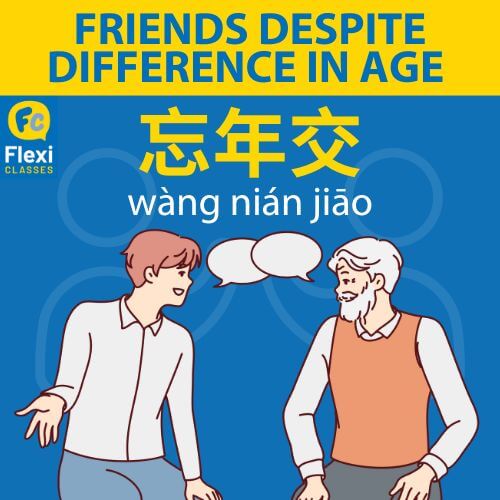
忘年交wàng nián jiāo
Friends despite difference in age
There are also situations where people from two different generations or who vary in age develop a close friendship.
In Chinese, we would call it a cross-generational friendship, where you forget about your age.
For example:
他和我爷爷是忘年交,虽然差了三十岁。
tā hé wǒ yé ye shì wàng nián jiāo, suī rán chà le sān shí suì
He and my grandfather are cross-generational friends, even though they are 30 years apart.
Friend in Chinese || Quick Reference: Friend in Chinese by Register
Quick reference: friend in Chinese by register
| Term | Pinyin | Register | Best for |
|---|---|---|---|
| 朋友 | péngyǒu | Neutral/everyday | Any context |
| 好友 | hǎoyǒu | Neutral/digital | Social apps, contact lists |
| 同学 | tóngxué | Warm/informal | Approaching someone friendly |
| 知己 | zhījǐ | Formal/literary | A true soulmate-level friend |
| 至交 / 挚友 | zhìjiāo / zhìyǒu | Formal/written | Heartfelt messages, speeches |
| 发小 | fàxiǎo | Informal/nostalgic | Childhood friends |
| 老友 | lǎoyǒu | Warm/informal | Long-time friends |
| 死党 | sǐdǎng | Informal/slang | Ride-or-die bestie |
| 哥们儿 | gēmenr | Slang (northern) | Male close friends, bro |
| 兄弟 | xiōngdì | Informal/slang | Brotherhood, loyalty |
| 闺蜜 | guīmì | Slang | Female best friend |
| 姐妹 | jiěmèi | Informal/slang | Female friend group |
| 老铁 | lǎotiě | Slang (northeastern) | Trusted, loyal friend |
Great! Now, we have given you a lot of words to learn to refer to friends. Have a good time socializing. You’ll start to develop a lot of good connections in China.
Ready to use these with a native speaker? You can try a free Mandarin class at Flexi Classes and practice all of this in a real conversation.
That's all for this article. Do you have any Chinese friend? Tell us how you would describe him/her here!
Friend in Chinese || FAQs
What is the most common word for “friend” in Chinese?
The most common word for “friend” in Chinese is 朋友 (péngyǒu). It can be used in both casual and formal contexts to refer to a friend.
Are there informal or slang words for “friend” in Chinese?
Yes! Some casual and slang terms include 哥们 (gēmen) for “bro” or close male friends, 闺蜜 (guīmì) for a close female friend, and 死党 (sǐdǎng) for a best friend or lifelong companion.
How do you say “best friend” in Chinese?
You can say 最好的朋友 (zuì hǎo de péngyǒu) for “best friend,” or use 知己 (zhījǐ) for a close confidant who truly understands you.
How do you say ‘acquaintance’ in Chinese?
The word for ‘acquaintance’ in Chinese is 熟人 (shú rén).
What is the slang term for a female best friend in Chinese?
The slang term for a female best friend in Chinese is 闺蜜 (guī mì).
How do you refer to a group of friends who only meet up for fun and drinks in Chinese?
The term for that kind of friendship is 酒肉朋友 (jiǔ ròu péng yǒu), meaning fair-weather friends or drinking buddies.
How do you describe a deep, inseparable friendship in Chinese?
The idiom 情同手足 (qíng tóng shǒu zú) describes a deep friendship as close as siblings.
What word would you use for a naughty friend who likes to tease you?
The word for a naughty friend is 损友 (sǔn yǒu), a playful term for a friend who plays pranks on each other without bad intentions.
What do Chinese people call their best friends?
It depends on the relationship and gender. Close male friends often use 哥们儿 (gē men er) or 兄弟 (xiōng dì), the equivalent of ‘bro’ or ‘brother’. Close female friends use 闺蜜 (guī mì). For a truly lifelong bond, 死党 (sǐ dǎng) is the go-to term for either gender, and 知己 (zhī jǐ) is used when you want to describe someone who really understands you on a deeper level.
What is the Chinese word for ‘bestie’?
死党 (sǐ dǎng) is the closest equivalent to ‘bestie’ in Mandarin. It literally means ‘die-hard clique’ and describes your ride-or-die. 闺蜜 (guī mì) is used specifically between female besties. For something more heartfelt and literary, 知己 (zhī jǐ) captures the soul-level connection that ‘bestie’ sometimes implies.
How do you say ‘hey bestie’ in Chinese?
The most natural way is 哎,闺蜜!(āi, guī mì!) for female friends, or 哥们儿!(gē men er!) / 老铁!(lǎo tiě!) for male friends. If you want something gender-neutral and affectionate, 死党 (sǐ dǎng) works too. Context and tone do a lot of the work in Mandarin: a warm, drawn-out 哎~ at the start signals closeness instantly.
What does ‘bestie’ mean?
‘Bestie’ is an informal English term for your best friend, the person you trust completely, share everything with, and consider closer than most family. In Mandarin, this idea maps onto several words depending on context: 闺蜜 (guī mì) for female bonds, 死党 (sǐ dǎng) for ride-or-die friends, and 知己 (zhī jǐ) for a friend who truly knows your inner self.
Does bestie mean love?
Not romantically, no. ‘Bestie’ signals deep platonic affection and trust. In Chinese, the word 知己 (zhī jǐ) comes closest to that feeling: it means someone who truly knows and understands you. It appears in classical poetry to describe the rarest kind of friendship, one that feels like being fully seen.
When a girl calls you bestie, what does it mean?
It means she considers you a close, trusted friend, someone she’s comfortable being herself around. In Chinese culture, the equivalent signal would be calling someone 闺蜜 (guī mì), which implies a bond built over time, shared experiences, and genuine mutual care. It’s a term of real affection, not just casual friendliness.
Want more from Flexi Classes?
Reading apps like Maayot are great for daily practice. If you also want to speak with a native teacher, you can try our live Mandarin classes with a 7-day free trial.
We also offer immersive Chinese courses in China. You can learn more about those here.
Sign up below and become part of our ever-growing community.
⭐ Download our free ebook, your starter pack of essential Mandarin learning resources!