

 Spanish
 Italian
 French
 Russian
 Japanese
 Korean
 Mandarin Simplified
 Mandarin Traditional
 Vietnamese
 Cantonese
 Shanghainese
 Taiwanese
Animals in Japanese: Key Vocabulary and Idioms
Pets, Zoo Animals & Farm Animals: Essential Japanese
Animals appear everywhere in Japanese, from everyday vocabulary like pets and farm animals to idioms you’ll hear in conversations, anime, and even the news.
Just like in English, animal expressions in Japanese often reflect cultural values, history, and how people see the world around them.
In this article, you’ll learn essential Japanese words for common animals, including pets, zoo animals, and farm animals. We’ll also explore animal-based idioms, where they come from, and what they really mean in natural Japanese.
By the end, you won’t just recognize animal names, you’ll understand how Japanese speakers actually use them. 💪
Animals in Japanese || Popular Animals as Pets
Animals in Japanese || Farm Animals
Animals in Japanese || Zoo Animals
Animals in Japanese || FAQs
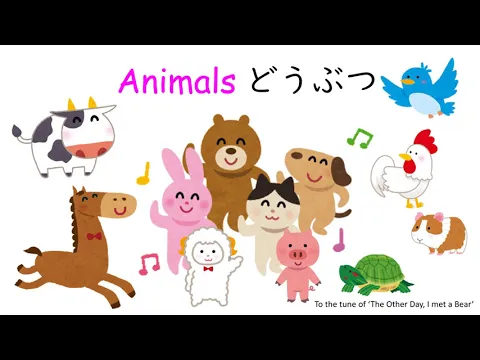
Animals in Japanese || Popular Animals as Pets
Animals that are popular as pets in Japan include:
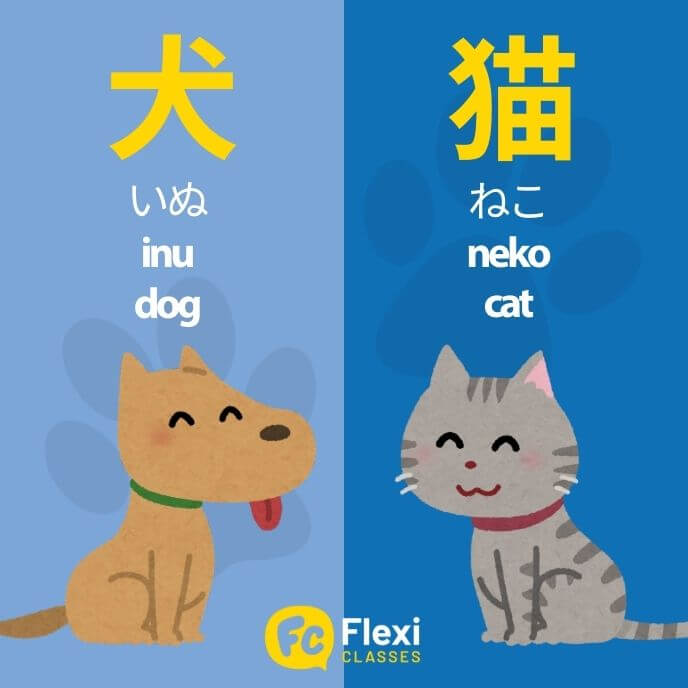
| JAPANESE | ROMAJI | ENGLISH |
| 犬 いぬ | inu | dog |
| 猫 ねこ | neko | cat |
| ハムスター | hamusutaa | hamster |
| 金魚 きんぎょ | kingyo | goldfish |
Dogs are the most popular animal in Japan and often appear in idiomatic expressions. They are used to describe how loyal and obedient someone is, or in contexts that make fun of those who follow the system.
The term “dog of the system” or “dog of power” is an expression used in Japan to ridicule those who are obedient to the system and seem to stop thinking.
| JAPANESE & HIRAGANA | ROMAJI | ENGLISH |
| あいつは会社の犬だ。 あいつはかいしゃのいぬだ。 | aitsu wa kaisha no inu da. | He’s a Corporate Lapdog. |
| 負け犬の遠吠え。 まけいぬのとおぼえ。 | make inu no tooboe. | Losers have bigger mouths. |
| 犬も歩けば棒にあたる。 いぬもあるけばぼうにあたる。 | inu mo arukeba bou ni ataru. | Every dog has his day. |
Cats are also very popular animals. In idiomatic expressions, they are often described as being very bored and sleeping all day.
For example, the phrase “neko no temo karitai / I’d like to borrow a cat’s hand” is used to describe someone who is extremely busy. This indicates that someone is so busy that he/she wants to mobilize even such an idle person.
Doting on someone is called “neko kawaigari.” Furthermore, to hide one’s true nature and appear docile is called “neko wo kaburu.”
猫の手も借りたい。
ねこのてもかりたい。neko no temo karitai.
I’m too busy.
猫かわいがりする。
ねこかわいがりする。neko kawaigari suru.
To dote on something/someone.

猫をかぶる。
ねこをかぶる。neko wo kaburu.
To hide one’s true nature and appear docile.
In English-speaking countries, the expression “Don’t give pearls to swine” appears in the “Gospel of Matthew,” and the equivalent expression in Japanese is “Neko ni koban.” “Koban” was the currency of the Edo period, made of gold and silver, but cats do not understand its value.
決算が近いので、猫の手も借りたいほど忙しい。
けっさんがちかいので、ねこのてもかりたいほどいそがしい。kessan ga chikai node, neko no temo karitai hodo isogashii.
With the closing of the fiscal year approaching, we are very busy.
祖父は孫を猫かわいがりしている。
そふはまごをねこかわいがりしている。sofu wa mago wo neko kawaigari shiteiru.
The grandfather dotes on his grandson.
彼は酒を飲まないので、グラスなんかプレゼントしても猫に小判だ。
かれはさけをのまないので、ぐらすなんかぷれぜんとしてもねこにこばんだ。kare wa sake wo nomanai node, gurasu nanka purezento shitemo neko ni koban da.
He doesn’t drink, so giving him a glass would be useless.
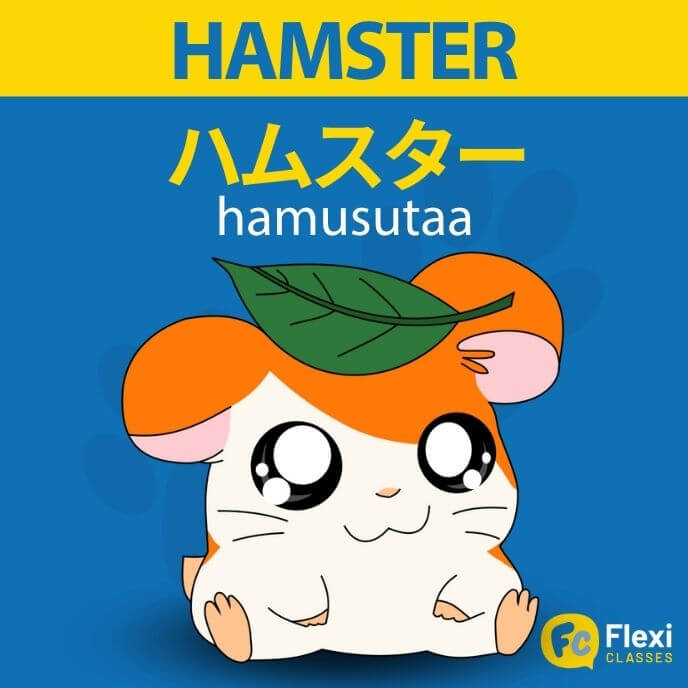
Hamsters are a favored small animal. One famous Japanese anime is “Tottoko Hamutarou とっとこハム太郎 ,” which features a character based on a hamster.
Tarou 太郎 たろう is a common name for Japanese boys, given to the eldest son, and is also often used to personify something, as in the case of Hamutarou.

Goldfish are also popular animals and are often kept in elementary and junior high schools as part of the educational process. In Japanese, the term “goldfish feces 金魚のフン きんぎょ kingyo no hun” is used to describe someone who is always following someone else around.
We say this because goldfish feces often stick to the goldfish, not away from it.
The nuance in Japanese is that the expression is said when making fun of someone from a third party’s point of view, and does not include a value judgment of the person being followed or the person following.
あいつはいつも部長にくっついている。まるで金魚のフンだ。
あいつはいつもぶちょうにくっついている。まるできんぎょのふんだ。aitsu wa itsumo buchou ni kuttsuite iru. Marude kingyo no hun da.
That guy is always attached to his director. It’s like goldfish feces.

Animal Crossing in Japanese // Villagers, Characters, Tools and More
This is one of the most popular games of 2021, check out Animal Crossing in Japanese for your villagers’ names, favourite characters and tools!
Animals in Japanese || Farm Animals
| JAPANESE | HIRAGANA | ROMAJI | ENGLISH |
| 牛 | うし | ushi | Cow |
| 豚 | ぶた | buta | Pig |
| 鶏 | にわとり、とり | niwatori / Tori | Chicken |
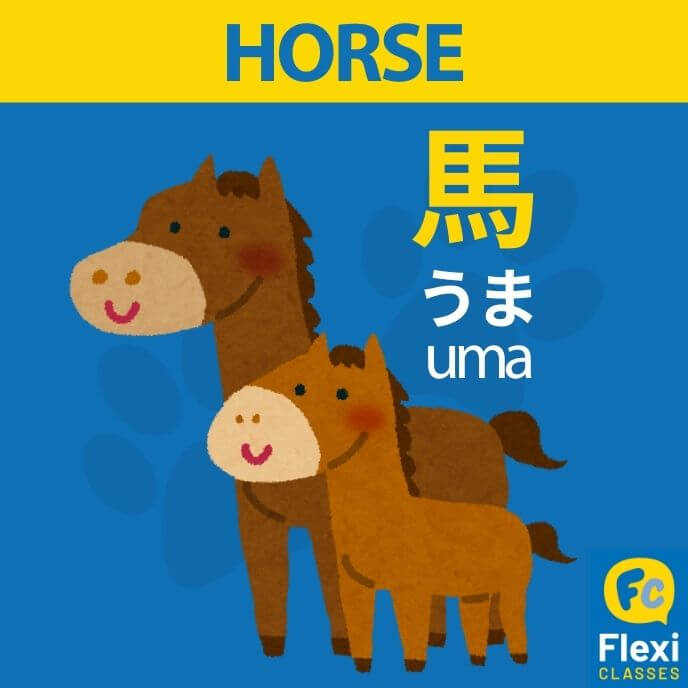
| 馬 | うま | uma | Horse |
| 羊 | ひつじ | hitsuji | Sheep |
牛
うしUshi
Cow
Cows have long been a favorite animal in Japan.
Until the Edo period, they were mainly used for farming and transportation. Especially in the Heian period (794-1185), the main means of transportation for aristocrats was a basket pulled by cows, called “gissha 牛車 ぎっしゃ .”
It is said that it was not until after the Meiji period (1868-1912) that it came to be used as a food source, when Western culture arrived. In Japanese, lying down immediately after eating is avoided by saying, “you will become a cow!”
豚
ぶたButa
Pig
Literature reveals that pigs also existed as far back as the Nara period (710-794). It is known from Neolithic excavations that pigs were eaten in the same way as raccoon dogs and other animals. In the Meiji period (1868-1912), pigs began to be eaten in the same way as cattle.
鶏
にわとり、とりNiwatori / Tori
Chicken
Chickens have been kept since the Kofun period. The eggs were taken while they were still laying eggs, and the birds that were no longer laying eggs were eaten for food. In modern Japan, grilled chickens are loved in taverns as “yakitori 焼き鳥 やきとり ” (grilled chicken).
In Japanese, a bird takes three steps and forgets what was there before, hence the expression “tori-atama 鳥頭 とりあたま ,” which means “a fool.” There are many other idioms using birds.
When a store is deserted, it is called:
閑古鳥が鳴く
かんこどりがなくkanko-dori ga naku
Quiet bird is chirping
And when something is thriving, it is called:
飛ぶ鳥を落とす勢い
とぶとりをおとすいきおいtobu tori wo otosu ikioi
As strong as to get a flying bird down
馬
うまUma
Horse
Horses are said to have been introduced from China during the Kofun period. Most of them were bred for military purposes, as when we think of warriors, they were riding horses.
In Kumamoto, a prefecture in Kyushu, there is a custom of eating horse as sashimi. This is called ba-sashi 馬刺し ばさ (horse sashimi).
There are also many idioms in Japanese that use horses.
To be agreeable is said to be 馬が合う うまがあう uma ga au.
For example, where in English we say “work like a dog” in Japanese we say “work like a carriage horse.”
In Japanese, the word baka / a fool is written 馬鹿 ばか in kanji, and its original meaning is “not being able to distinguish between a horse (馬 うま )and a deer(鹿 しか )”.
Also, a person who does not listen no matter how much you tell him or her is called “uma no mimi ni nenbutsu”.
馬の耳に念仏
うまのみみにねんぶつuma no mimi ni nenbutsu
preaching to the deaf
羊
ひつじHitsuji
Sheep
As for sheep, there is an article in the Nihon Shoki (Chronicles of Japan) that sheep were presented from the Korean peninsula in 599 AD. It seems that sheep did not exist in Japan before that time.
After that, however, there are few records of sheep. Although they were sometimes used as gifts, the general public had never seen these animals.
In the Meiji period (1868-1912), the production of wool to make military uniforms was encouraged, and the general public began to understand what sheep were all about. Perhaps for this reason, there are few idioms using sheep.
In Japan, barbecued mutton is called “Genghis Khan. ジンギスカン – jingisukan. It is said that the name is a reference to Genghis Khan of Mongolia, and that the Japanese who expanded into mainland China during the Meiji period (1868-1912) created this dish by adapting nomadic sheep food for the Japanese, and named it Genghis Khan after Mongolia.
Animals in Japanese || Zoo Animals
| JAPANESE | ROMAJI | ENGLISH |
| ライオン | raion | Lion |
| 虎 とら | tora | Tiger |
| 象 ぞう | zou | Elephant |
| 猿 さる | saru | Monkey |
Since lions and elephants were not originally found in Japan, there are no particular expressions related to them.
虎
とらtora
Tiger
There is a saying using the tiger:
虎穴に入らずんば虎児を得ず
こけつにいらずんばこじをえずkoketsu ni irazunba koji wo ezu.
If you don’t enter the tiger’s den, you will not get the tiger’s cub.
Another saying using the tiger is :
虎の威を借る狐
とらのいをかるきつねtora no i wo karu kitsune.
A fox that borrows the authority of a tiger.
This means a person who swaggers about under borrowed authority.
猿
さるsaru
Monkey
There are many expressions using the monkeys in Japanese.

For example:
猿も木から落ちる
さるもきからおちるsaru mo kikara ochiru
Even monkeys fall from trees
This literally means “even monkeys fall from trees,” and implies “Homer sometimes nods.”
To copy only superficial aspects without understanding the essence is called 猿まね さる sarumane.
As we have seen above, there are many idiomatic expressions related to animals in Japanese. It might be interesting to start with expressions related to your favorite animals!
What’s your favorite animal in Japanese? Tell us below here

27 Country Names in Japanese 🌍 Your Complete Guide
Countries in Japanese – Interested in learning some country names in Japanese? Some actually translate and sound very similar to English, come and see!
Animals in Japanese || FAQs
What animals are popular as pets in Japan?
In Japan, dogs, cats, hamsters, and goldfish are popular pets.
How do you say ‘pet’ in Japanese?
The word for pets in Japanese is ペット (petto). Common pets include 犬 (dog), 猫 (cat), and 魚 (さかな, fish), and pet-related vocabulary is widely used in everyday conversation.
What does “猫の手も借りたい (ねこのてもかりたい) neko no temo karitai” mean?
It represents being very busy.
Do they eat horses in Japan?
In Kumamoto prefecture, they eat horses as sashimi, which is called “ba-sashi 馬刺し (ばさし).”
Want More From LTL?
WANT TO LEARN JAPANESE? Check out our online Japanese courses here.
We offer a 7-day free trial to all new students where you can study 24/7.
What about studying Japanese in Japan instead? We’ve got your back. Our Japanese courses in Tokyo can either be taken in small groups of no more than 5 students or individually for a more tailored experience.
We even offer incredible homestay experiences in Tokyo as well.
Come and be a part of this amazing community.