

 Spanish
 Italian
 French
 Russian
 Japanese
 Korean
 Mandarin Simplified
 Mandarin Traditional
 Vietnamese
 Cantonese
 Shanghainese
 Taiwanese
Desu vs Masu: Basics of Japanese Honorifics
Understanding the Usage of Desu and Masu
In the Japanese language, polite expressions are very important. This is because in Japan, social order and the order of elders and children are highly valued, and this is reflected in everyday language expressions.

Many of the elements that are considered difficult in the Japanese language, such as honorifics, are related to the expressions used to express this social order. These are also the core of the Japanese language and the main points of study.
In Japan, people are expected to speak in honorific form unless they are close friends.
The Japanese language taught in textbooks and materials for foreigners should also be based on polite expressions. This is due to the fact that polite language is the basic language in Japanese, and the use of polite language can avoid causing unnecessary problems in social interactions.
Desu Meaning || Desu vs Masu
Desu Meaning || Function to Make Adjectival Verbs Polite
Desu Meaning || The Question-Creating Particle “Ka”
Desu Meaning ||Creating the Past Tense “Deshita” and “Mashita”
Desu Meaning || FAQs
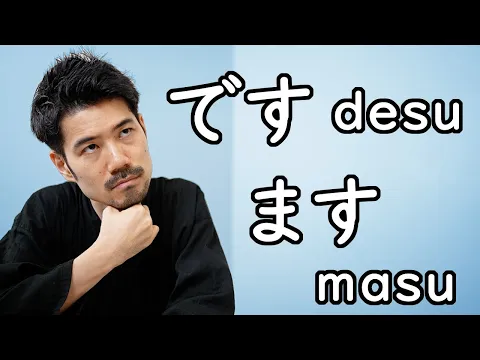
Desu Meaning || Desu vs Masu
Polite words such as desu and masu are among the most basic vocabulary. The particle desu is attached to a noun to indicate politeness. Desu is the polite form of da.Da is a common way, which is not polite and sometimes sounds crude.
|
わたしはジョンだ。
watashi wa jon da. I’m John. | ➡️ |
わたしはジョンです。
watashi wa jon desu. I’m John. |
|
これがチケットだ。
korega chiketto da. This is the ticket. | ➡️ |
これがチケットです。
kore ga chiketto desu. This is the ticket. |
|
これはビールだ。
kore wa bi-ru da This is beer. | ➡️ |
これはビールです。
kore wa bi-ru desu. This is beer. |
The word です desu can also be attached to adjectives.
ジョンは若いです。
ジョンはわかいです。jon wa wakai desu.
John is young.
これはおいしいです。
kore wa oishii desu.
This is delicious.
東京は暑いです。
とうきょうはあついです。toukyou wa atsui desu.
Tokyo is hot.
To make the verb polite, add ます masu.
| 私は食べる。 わたしはたべる。 watashi wa taberu. I eat. | ➡️ | 私は食べます。 わたしはたべます。 watashi wa tabemasu. I eat. |
| 日本語を話す。 にほんごをはな nihongo wo hanasu. I speak Japanese. | ➡️ | 日本語を話します。 にほんごをはなします。 nihongo wo hanashimasu. I speak Japanese. |
| ビールを飲む。 ビールをのむ。 bi-ru wo nomu. I drink beer. | ➡️ | ビールを飲みます。 ビールをのみます。 bi-ru wo nomimasu. I drink beer. |
In Japanese, a polite writing style consisting mainly of sentences ending with the particle desu or masu is called ですます調 ですますちょう desu-masu-cho. Here, 調 means tone.
Basically, it is important to be aware of this desu-masu-cho approach to speaking Japanese.
It is also useful to remember こそあど言葉 こそあどことば kosoado-kotoba. This is a list of four indicative pronouns in Japanese: “これ kore,” “それ sore,” “あれ are,” and “どれ dore.”
These “kosoado-kotoba” can also be used as expressions by adding desu as is.
|
これです。
kore desu. | This is it. |
|
それです。
sore desu. | That’s it. |
|
あれです。
are desu. | That’s it. |
|
どれですか?
dore desu ka? | Which one? |
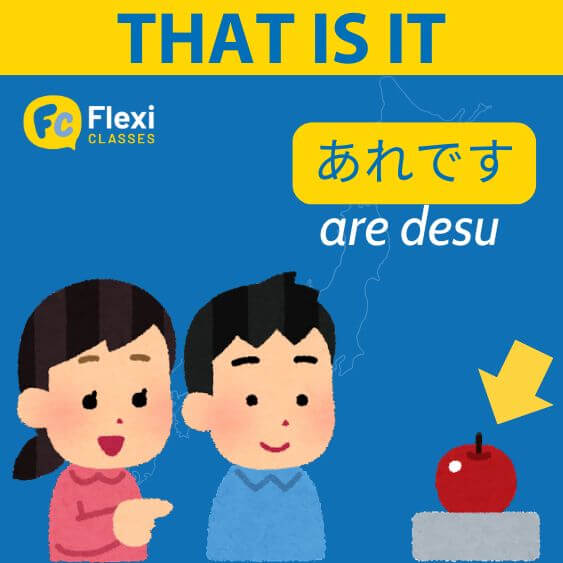
There are four sets of kosoado-kotoba. A variation of kosoado-kotoba is to indicate a location. The first is the usual way of saying things, and the second is the polite way.
| ここ・こちら koko kochira | here |
| そこ・そちら soko sochira | there |
| あそこ・あちら asoko achira | overthere |
| どこ・どちら doko dochira | where |
Examples:
Casual expressions:
どこでごはん食べる?
どこでごはんたべる?dokode gohan taberu?
Where do you want to eat?
そこがいいんじゃない?
soko ga iinjanai?
Maybe we should eat there.
ここにしよう。
koko ni shiyou.
Let’s eat here.
どこにいるの?
doko ni iruno?
Where are you?
Formal expressions:
あちらにございます。
achira ni gozaimasu.
It is over there.
そちらをごらんください。
sochira wo goran kudasai.
Please take a look there.
こちらの商品でよろしいですか?
こちらのしょうひんでよろしいですか?kochira no shouhin de yoroshii desuka?
Are you sure this is the right item?
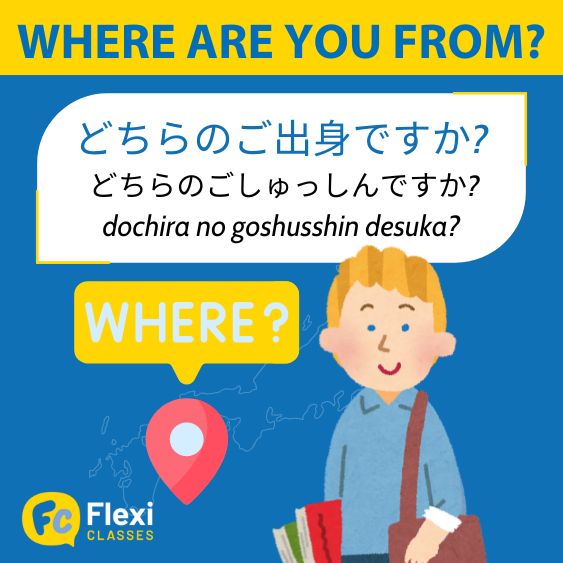
どちらのご出身ですか?
どちらのごしゅっしんですか?
dochira no goshusshin desuka?
Where are you from?
These words can also be added directly to desu.
| こちらです。 | kochira desu |
| そちらです。 | sochira desu |
| あちらです。 | achira desu |
| どちらですか? | dochira desuka? |
The other two sets are as follows:
| この | kono | this |
| その | sono | that |
| あの | ano | that |
| どの | dono | which |
| こう | kou | this way |
| そう | sou | that way |
| ああ | aa | that way |
| どう | dou | how |
The former set is an indicative adjective attached to a noun.
Since this is a set attached to a noun, desu cannot be added. The latter set is a set of directives that describe how and what is going on. You can add desu as is here.
| こうです。 | koudesu |
| そうです。 | soudesu |
| ああです。 | aa desu |
| どうですか? | doudesuka? |
Formal and Informal Ways to Ask ‘How Are You?’ in Japanese
Starting the Conversation: How Are You in Japanese When you meet someone in any country, it’s a pretty universal custom to ask ‘How are you?’ There are many expressions in Japanese for inquiring about the current state of affairs and…
Desu Meaning || Function to Make Adjectival Verbs Polite
What is an adjectival verb?
An adjectival verb is a word ending in da that describes the state or nature of a thing.
For example:
きれいだ
kireida
beautiful/clean
この水はきれいだ。
このみずはきれいだ。kono mizu wa kireida.
This water is clean.
しずかだ
shizukada
quiet
ここはしずかだ。
koko wa shizuka da.
It is quiet here.
便利だ
べんりだbenrida
useful, convenient
これは便利だ。
[これはべんりだ。]
kore wa benri da.
This is useful.
When making these da polite, simply change them to desu as well.
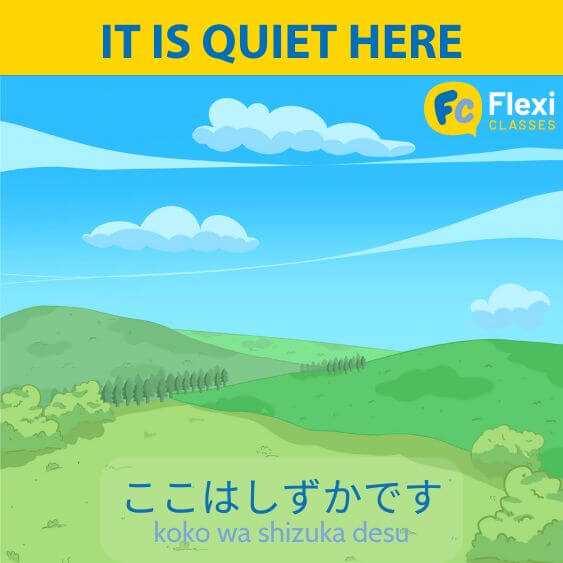
きれいです。
kirei desu
しずかです。
shizuka desu
便利です。
べんりです。benri desu
Desu Meaning || The Question-Creating Particle Ka
The particle か ka can be added at the end of a sentence to create a question.
Even in these cases, simply adding desu can increase politeness.
これは何か?
これはなにか?kore wa nani ka?
What is this?
これは何ですか?
これはなんですか?kore wa nan desuka?
What is this?
明日休みか?
あしたやすみか?ashita yasumi ka?
Are you off tomorrow?
明日休みですか?
あしたやすみですか?ashita yasumi desuka?
Are you off tomorrow?
As you can see, desu is directly followed by ka. Remember that in the list above about kosoado-kotoba, only dore had ka?
Because dore is a word about a question, the particle ka had to be added. Of course, kore, sore, and are can also be made into expressions expressing questions by adding ka.
| これですか? | kore desuka? | Is this it? |
| それですか? | sore desuka? | Is that it? |
| あれですか? | are desuka? | Is that it? |
The particle “ka” can also be added to “masu”.
| 食べます たべます tabemasu Do you want to eat? | ➡️ | 食べますか? たべますか? tabemasuka? Do you want to eat? |
| 飲みます のみます nomimasu Do you want to drink? | ➡️ | 飲みますか? のみますか? nomimasuka? Do you want to drink? |
Verbs in Japanese // A Beginners Guide
Learning Verbs in Japanese isn’t all that hard. We teach you the basics with this super easy to follow guide which also includes a quiz at the end.
Desu Meaning || Creating the Past Tense Deshita and Mashita
The past tense of “desu” is “deshita” and the past tense of “masu” is “mashita.” Each can be simply interchanged to create the past tense.
| 食べます。 たべます。 tabemasu. I eat. | ➡️ | 食べました。 たべました。 tabemashita. I ate. |
| 話します。 はなします。 hanashimasu. I speak. | ➡️ | 話しました。 はなしました。 hanashimashita. I spoke. |
|
きれいです。
kireidesu. It is beautiful. | ➡️ |
きれいでした。
kirei deshita. It was beautiful. |
As we have seen above, you can easily increase the variety of expressions by combining particles such as desu, masu, ka, and ta.
By speaking in desu-masu-cho, you can give the other person a polite impression, and you can have a conversation without rudeness even at a stage when you do not know Japanese well.
Please learn these words and speak Japanese more and more!
Still have questions about this article? Share with us here!
Desu Meaning || FAQs
What is “desu?”
“Desu” is the easiest particle to express politeness. Attached to a noun or adjective, it expresses politeness.
What is “masu?”
“Masu” is a basic polite word, as is ”desu.” This one is attached to a verb to express politeness.
What is “desu-masu-cho?”
In “desu-masu-cho,” “desu” and “masu” are used as the basis of the sentence, indicating a polite style that would be used in formal situations or official documents.
What is “kosoado-kotoba?”
This is a list of four indicative pronouns in Japanese: “これ kore,” “それ sore,” “あれ are,” and “どれ dore.”
What is “ka?”
“Ka” is a Japanese particle for creating questions. When added at the end of a sentence, it creates a question about the content of the sentence.
Want More From LTL?
WANT TO LEARN JAPANESE? Check out our online Japanese courses here.
We offer a 7-day free trial to all new students where you can study 24/7.
What about studying Japanese in Japan instead? We’ve got your back. Our Japanese courses in Tokyo can either be taken in small groups of no more than 5 students or individually for a more tailored experience.
We even offer incredible homestay experiences in Tokyo as well.
Come and be a part of this amazing community.