

 Spanish
 Italian
 French
 Russian
 Japanese
 Korean
 Mandarin Simplified
 Mandarin Traditional
 Vietnamese
 Cantonese
 Shanghainese
 Taiwanese
Japanese Names // Structure, Nicknames & Cultural Insights
Your Ultimate Guide to Japanese Names
Understanding how Japanese names work is essential if you want to understand Japanese culture.
A name isn’t just a label- it reflects history, social norms, and even how people interact with each other on a daily basis.
At first glance, Japanese names seem simple in structure. However, knowing how to address someone correctly can be surprisingly challenging.
In many English-speaking countries, calling someone by their first name is standard. In Japan, this is reserved for close friends, family, or situations where a superior is speaking to a subordinate. In most other cases, especially formal ones, people are addressed by their family name or even by their title, rather than their given name.
In this article, we’ll break down how Japanese names are structured and explain how to address people appropriately in different social situations.
Japanese Names || Structure of Japanese Names
Japanese Names || Knowledge About Surnames
Japanese Names || How to Give a Nickname
Japanese Names || FAQs
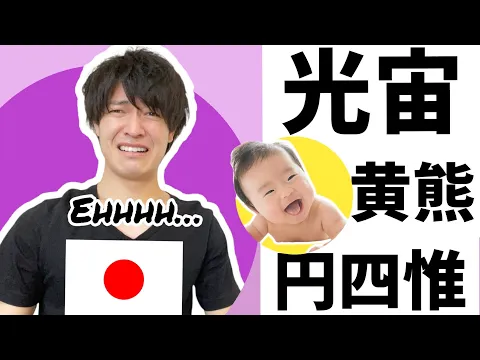
Japanese Names || Structure of Japanese Names
In modern times, the structure of Japanese names is very simple.
First comes the family name, followed by the given name. This is the only name in the family register. There is no middle name.
In many cases, only the first name is said in English, but in Japanese, only the surname is said. When saying your name at the first meeting, you may also say your full name.
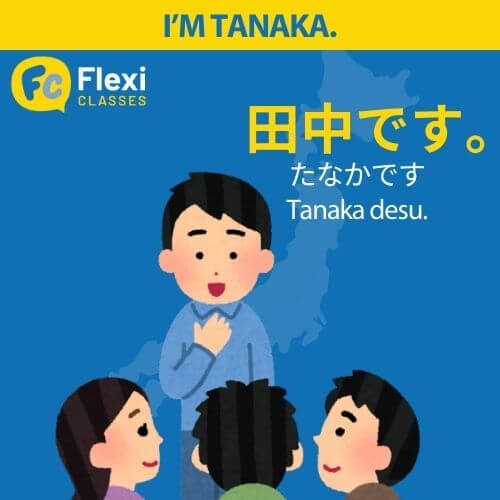
Take Tanaka Ichiro, for example. Tanaka is a common surname in Japan. Ichiro is also a common name.
田中です。
たなかですTanaka desu.
I’m Tanaka.
田中一郎です。
たなかいちろうですTanaka Ichiro desu.
My name is Ichirō Tanaka.
You do not say “I am Ichiro” as you do in English. For a Japanese person to say only his/her first name when meeting someone for the first time would give an extremely casual impression.
However, if you are an English speaker, this may not bother the other as much, since Japanese are well aware that the order of names is reversed in English and Japanese.
If you want to be cautious, you can be clear about your last name and first name.
はじめまして、ジョン・スミスです。ジョンが名前で、スミスが苗字です。
はじめまして、ジョン・スミスです。ジョンがなまえで、スミスがみょうじです。Hajimemashite, John Smith desu. John ga namae de, Smith ga myouji desu.
Nice to meet you, my name is John Smith. John is my first name and Smith is my last name.
Saying it this way will sound very polite to the Japanese. If you have a middle name, it is a good idea to tell them which one it is.
In Japanese, family names are called 苗字 みょうじ myoji , 姓 せい sei, or 氏 うじ uji.
The first name also called 下の名前 したのなまえ .
Together, they are called 姓名 せいめい seimei or 氏名 しめい shimei.
On documents and other forms, it is often written 氏名. In conversation, it is common to say 苗字と下の名前 みょうじとしのたなまえ myouji to shita no namae.
A Family Name…
| JAPANESE | ROMAJI |
| 苗字 みょうじ | myouji |
| 姓 せい | sei |
| 氏 うじ | uji |
A Given Name
| JAPANESE | ROMAJI |
| 名 めい | mei |
| 下の名前 した なまえ | shita no namae |
A Full Name
| JAPANESE | ROMAJI |
| 姓名 せいめい | seimei |
| 氏名 しめい | shimei |
Example:
お名前はなんですか?
What is your name?田中です。
I’m Tanaka.下の名前はなんですか?
What is your given name?一郎です。
I’m Ichiro.While almost all male names are written exclusively in kanji, some female names are written only in hiragana or a combination of hiragana and kanji. This is due to the fact that historically, hiragana was created from kanji for use by women.
In Japan, the hierarchy of brothers and sisters is also emphasized. This is largely due to Confucianism.
Of course,today, there is little notion that a younger brother must respect his older brother, but the idea remains in the structure of names.
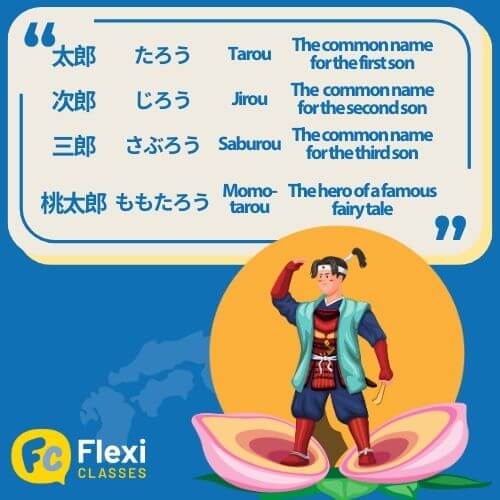
For example, the name Ichiro, mentioned above, means “first boy,” or “first son.” Names such as Taro, Jiro, and Saburo are also given based on the order of birth.
For example, the name Momo-taro, the hero of a famous Japanese fairy tale, means the first son born from a peach, and “Taro” is known as a typical name given to a Japanese male.
太郎
Taroua common name for the first son
次郎
Jiroua common name for the second son, where 次 じ – ji means “next.”
三郎
Saburoua common name for the third son, where 三 さん – san means “three.”
桃太郎
Momo-tarouThe hero of a famous fairy tale, 桃 もも – momo means peachs.
Women, on the other hand, are often given these characters in their names:
子 こ ko
美 み mi
恵 え e
Some of these names include:
弘子 ひろこ Hiroko
綾子 あやこ Ayako
弘美 ひろみ Hiromi
恵 めぐみ Megumi
The character 子 こ ko is a kind of a diminutive, and is also used in names as a suffix for something pretty.
美 び bi means beautiful and 恵 めぐみ Megumi means blessed.
Japanese Names || Knowledge About Surnames
Japanese family names are called in a few ways: 苗 字 みょうじ myouji、姓 せい sei、氏 うじ shi.
This is based on historical background.
In ancient Japan, 姓 せい sei; and 氏 うじ shi; had distinctly different meanings.
氏 うじ uji; refers to a family group, while a 姓 せい sei; refers to a position given by the imperial court. Since positions were often hereditary, they came to represent the family as well.
苗字 みょうじ myōji; began to be given to further distinguish members in 氏 うじ shi; as the number of people belonging to 氏 increased. In many cases, the distinction was made by the name of the place of the fief or the name of the position.
For example, the Takeda clan 武田氏 たけだし Takeda-shi, of Takeda Shingen 武田信玄 たけだしんげん was originally a branch of the Genji 源氏 げんじ . The number of Genji members increased so much that they began to use the place name Takeda 武田 たけだ as their 苗字 みょうじ myouji.
Today, 苗字, 姓, and 氏 are all used without much distinction as family names. This history is still alive today, and especially in formal situations, it is common to refer to the other party by his/her title.
For example, if Tanaka Ichiro is the director of a department, you do not call him “Ichiro.” This only happens in the case of a family-owned company where the president is Tanaka Ichiro’s father.
Usually we call him like the following:
| JAPANESE | HIRAGANA | ROMAJI | ENGLISH |
| 田中部長 | たなかぶちょう | Tanaka Buchou | The Director Tanaka |
| 部長 | ぶちょう | Buchou | The Director |
| 田中さん | たなかさん | Tanaka-san | Mr. Tanaka |
In some Japanese companies these days, it is customary to address people by their last name with the honorific title san さん instead of their job title, but this is still not common practice.
In the workplace, it is better to address people by their job title unless they tell you otherwise.
Calling people by their job title is also for strangers.
For example, you can say the following to a cab driver or a clerk:
| JAPANESE & ROMAJI | ENGLISH |
| 運転手さん、池袋駅まで行ってください。 Untenshu-san, eki made itte kudasai | Driver, please go to Ikebukuro station. |
| 店員さん、これはいくらですか? Ten-in-san, kore wa ikura desuka? | Clerk, how much is this? |
| 先生、質問があります。 Sensei, shitsumon ga arimasu. | Teacher, I have a question. |
Such invocations may sound strange to English speakers, but it sounds very Japanese to not call the other person’s name very often. In Japanese, personal pronouns are also not used much in conversation.
We do not often say あなた or きみ to a person’s face.
Even when the person is in front of you, it is common to say 先生は せんせいは – sensei wa or 部長は ぶちょう – buchou wa meaning “You are”.
Japanese Names || How to Give a Nickname
In formal situations, first names are not called, but on the contrary, in casual situations, first names are used and nicknames are sometimes used.
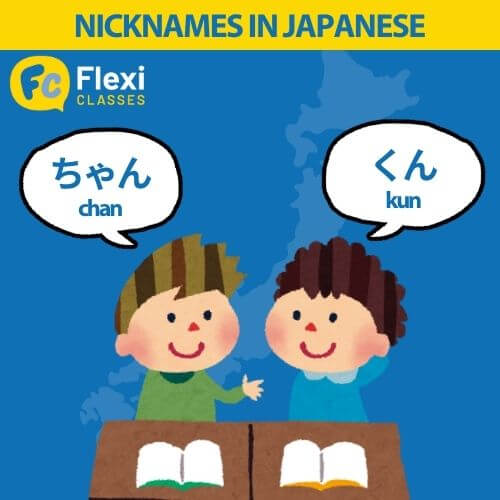
To create a close address in Japanese, it is common to add ちゃん chan or くん kun to a name or part of a name.
For example, Tanaka Ichiro becomes Ichiro-kun or Ichiro-chan. “Chan” is mainly used for women and “kun” for men, but “chan” is sometimes used for men as well, especially in a friendly manner.
In some cases, names are shortened and “kun” or “chan” is added to them. For example, the name “Yuta” may be shortened to “Yu-kun” or “Yu-chan.”
Calling out in Japanese is very complicated, but once you get used to it, it is very easy. Practice is the best way to learn these things. Please take the opportunity to speak with native speakers and become more proficient in Japanese! That’s all for this article. Good luck with your studies!
What’s your name in Japanese? Share with us here!
27 Country Names in Japanese 🌍 Your Complete Guide
Countries in Japanese – Interested in learning some country names in Japanese? Some actually translate and sound very similar to English, come and see!
Japanese Names || FAQs
What is the structure of Japanese names?
Japanese names usually consist of a surname and a given name.
Can I call a Japanese by his/her first name even when we meet for the first time?
No. In Japanese, people are not addressed by their first names when they are not so close. It is common to address them by their family name with “san” or by their job title.
What does “Taro” mean?
Taro is a common name for a Japanese boy, especially for the first boy.
Why is sibling order so important in Japan?
This is because of the culture of respect for elders due to Confucian influence. Today, however, the influence is not so great.
Why is it considered more polite for Japanese people to be addressed by their job title and not by their first name
This is because historically, Japanese names have been determined by territory and position. Since a name indicated one’s position in society, calling names shows respect for that position.
Want More From LTL?
WANT TO LEARN JAPANESE? Check out our online Japanese courses here.
We offer a 7-day free trial to all new students where you can study 24/7.
What about studying Japanese in Japan instead? We’ve got your back. Our Japanese courses in Tokyo can either be taken in small groups of no more than 5 students or individually for a more tailored experience.
We even offer incredible homestay experiences in Tokyo as well.
Come and be a part of this amazing community.