
 Spanish
 Italian
 French
 Russian
 Japanese
 Mandarin Simplified
 Mandarin Traditional
 Vietnamese
 Cantonese
 Shanghainese
 Taiwanese
Duolingo for Learning Korean: Pros and Cons You Should Know
Is Duolingo the Best Way to Learn Korean? Pros and Cons Explained
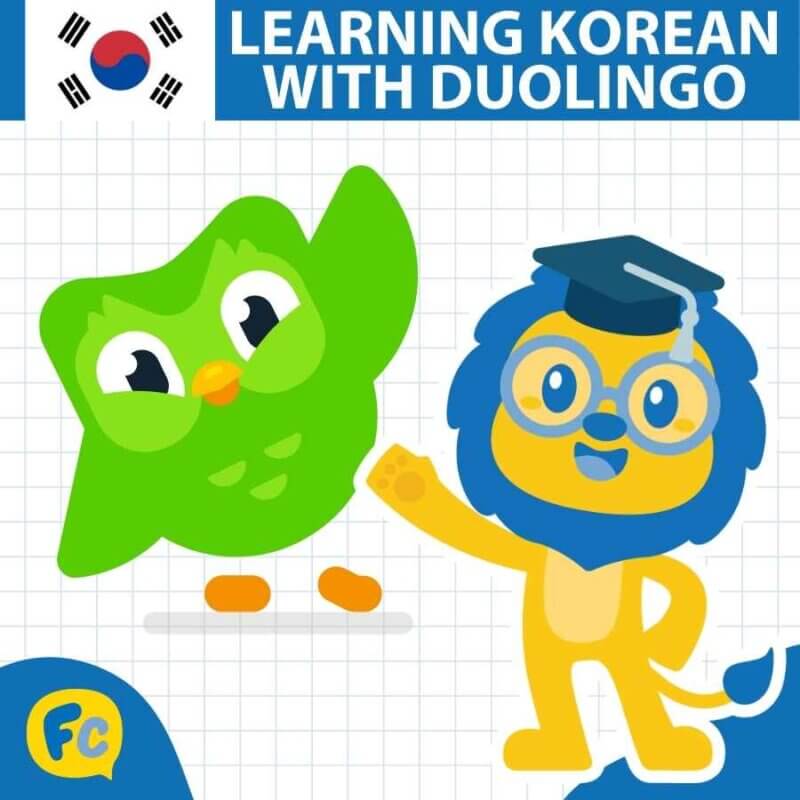
Duolingo- known as 듀오링고 in Korean- is one of the most popular language learning apps out there today.
With its fun, bite-sized lessons and user-friendly design, it’s become a go-to tool for millions of learners around the world.
Among the many language learning platforms available, Duolingo stands out for its strong focus on gamification—turning language study into something that feels more like a game than homework.
This playful approach helps keep users motivated and coming back for more, which is especially helpful when tackling a challenging language like Korean.
But is Duolingo really the best way to learn Korean? Let’s take a closer look at the pros and cons.
Learning Korean with Duolingo | Pros of Learning Korean with Duolingo
Learning Korean with Duolingo | Cons of Learning Korean with Duolingo
Learning Korean with Duolingo | Cultural Context Limitations
Learning Korean with Duolingo | Not a Complete Learning Solution
Learning Korean with Duolingo | FAQ
Learning Korean with Duolingo | Pros of Learning Korean with Duolingo
Gamification of Learning
Gamification would be the number one reason to use Duolingo.
Imagine approaching learning Korean like playing games–you’ll never get tired of learning! This is what Duolingo employed and made learning language fun and engaging.
When you use Duolingo to learn Korean, you will earn points, level up, and receive rewards whenever you complete a lesson. By doing this, users are motivated to practice regularly.
And we all know, the key to success in anything is consistency.
Accessibility and Convenience
Duolingo is an app available on multiple platforms, including smartphones and desktops, making it accessible anytime and anywhere. This convenience is like a game changer for language learners as you can incorporate language learning into your daily routines.
Some popular times Duolingo is used are during commutes on and off work, break times, or at home before getting to bed.
As you won’t need to get up and travel to a place to learn the language, this makes it very convenient for people to get on the app and start learning Korean!
Free to Use
Being available for free to anyone anywhere is the most significant advantage of this app. As language learning usually comes with a cost, providing a free course attracts many language learners to use this app.
Therefore, Duolingo is a very popular choice for potential Korean learners who want to try out the language without committing a lot of time or money to it upfront.
It’s also a great choice for people who live in countries that don’t have well-structured Korean language programs.
무료서비스
Free service무료
mu-ryo
Free
서비스
seo-bees
Service
Structured Learning Path
A great advantage of using Duolingo is that as you progress, so do the lessons they provide you.
The more you understand the grammar and structure, the more complex questions it will provide you so that you are not just answering random Korean language questions but actually making progress. This organised approach can help beginners build a solid foundation in Korean.
Wide Range of Practice Activities
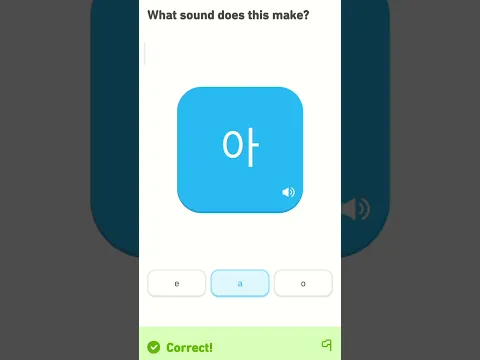
Duolingo makes sure that all your senses are busy when learning the language. The platform offers exercises, including listening, speaking, reading, and writing activities. This variety helps reinforce learning and keeps Korean learners engaged.
Additionally, the pronunciation practice function through speech recognition technology even helps you to develop your Korean speaking skills.
By using the speech recognition function, you will get a glimpse of how well you are pronouncing certain Korean words.
What is Naver? A Quick & Easy Introduction
Despite being called the “Google of South Korea” Naver is more like a portal (think Yahoo), giving access to a plethora of other services.
Learning Korean with Duolingo | Cons of Learning Korean with Duolingo
Lack of Content
While Duolingo is effective for beginners, the Korean content they provide may not be sufficiently comprehensive for advanced learners.
The app primarily focuses on basic vocabulary and grammar, which may leave learners lacking in more nuanced aspects of Korean, such as complex sentence structures and slang.
Many users comment that Duolingo’s European languages are better to learn as they have better-curated content. For Asian languages like Korean, Duolingo still needs improvement with this.
BONUS 👉Need help understanding Korean grammar? Check out our free Korean Grammar Bank
Lack of Real Conversation Practice
Here is where the limit of app language learning comes in.
Although Duolingo is free and provides speaking opportunities here and there, as this is a self-learning app, it lacks real-life conversation practices.

If you have experience learning a language, you will most definitely know that real-life conversation practice is a vital part of language learning.
In particular, interacting with Native Korean speakers is a part that is missing when learning with language apps like Duolingo.
대화
dehwa
Conversation
Repetitive Exercises
As Duolingo learning isn’t a learning program you conduct with a real human, exercises could get repetitive over time.
While repetition is essential for reinforcing learning, excessive repetition can lead to boredom and disengagement. This can be particularly challenging for learners who want quick progress.

Inadequate Pronunciation Feedback
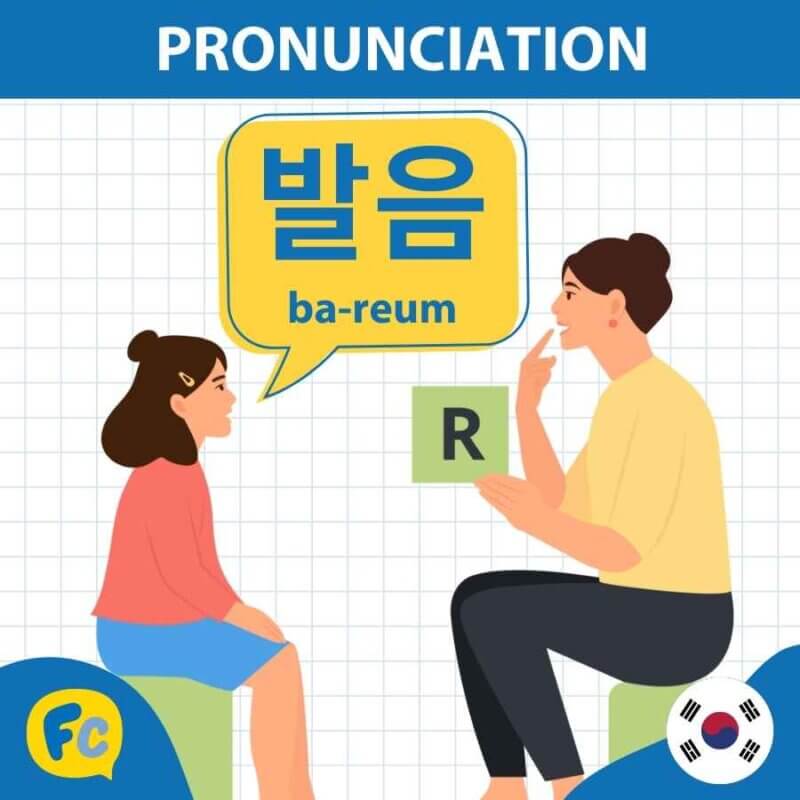
The biggest downside of Duolingo would be its pronunciation exercises and feedback. As the feedback is not given from a Native Speaker, this can’t provide very accurate feedback.
Relying solely on app learning without the help of a professional isn’t the best way to master a language.
발음
ba-reum
Pronunciation
Cultural Context Limitations
Learning a language isn’t only learning about the verbal language, but the many cultural and behavioral nuances associated with it. In fact, cultural and historical context is what makes language learning fun and what really differentiates your understanding of a language.
While Duolingo does provide some cultural insights, it may not offer the depth necessary for a full understanding of the cultural nuances of the Korean language.
Learners might miss out on critical aspects of Korean culture, including social hierarchies, formal vs. informal language use, and regional dialects.
존댓말
jon-det-mal
Honorific system
The Korean language consists of a complex language system that uses the honorific system in different situations. Mastering this system is key to understanding and using Korean.
사투리
Dialect부산 사투리
busan sa-tu-ri
Busan area dialect
제주도
jejudo sa-tu-ri
Jeju Island dialect

✨Living in Korea as a Foreigner || Everything You Need to Know
Things You Need to Know During Your Stay! PLUS Survival Korean Phrases Ready to pack your bags and make your way to Korea soon? Or are you planning to come to Korea in the near future? In the past 10-15…
Not a Complete Learning Solution
Duolingo should be viewed as a supplemental tool rather than a standalone solution for Korean language learning.
While it can effectively introduce vocabulary and basic grammar, learners will likely need additional resources, such as textbooks, language exchange partners, or tutors, to achieve fluency.
Here is a great way to use Duolingo effectively to learn Korean:
Supplement with Other Resources: Combine Duolingo with other Korean language learning resources such as textbooks, online courses, or language exchange platforms to enhance learning and fulfill the lacking parts of the app.
Interact with Native Speakers: Find out ways to interact with Native Speakers. There isn’t a better way than to interact and get feedback from Native Koreans.
Focus on Consistency: Build a daily routine to practice on Duolingo, even if only for a few minutes. Consistency is key!
Now that you learned some tips and tricks using Duolingo, start your Korean language learning now!
Learning Korean with Duolingo | FAQ
Is Duolingo good for learning Korean as a complete beginner?
Yes, Duolingo is beginner-friendly and introduces Korean gradually using simple vocabulary and sentence structures. However, it may not fully explain grammar concepts in depth.
Can Duolingo make you fluent in Korean?
Duolingo alone is unlikely to make you fluent. It’s a great tool for daily practice and vocabulary building, but fluency requires additional speaking, listening, and grammar resources.
Does Duolingo teach Hangul (the Korean alphabet)?
Yes, Duolingo teaches Hangul at the beginning of the course, helping learners recognize and read Korean characters early in their studies.
What are some good alternatives to Duolingo for learning Korean?
Other popular Korean learning tools include Talk To Me In Korean, LingoDeer, Memrise, and online platforms where you can take Korean classes with native speaker teachers, like our Flexi Classes!
How do you say language in Korean?
언어 (uhn-eo) – language
Specific languages in Korean include:
영어 – (young-eo) – English
[spak 불어] (bul-eo) – French
일어 (il-eo) – Japanese
한국어 (han-guk-eo) – Korean
How do you say app or application in Korean?
Koreans also use the English word app or application.
앱 (ep) – app
어플리케이션 (uh-pul-li-kay-tion) – application
Want More From LTL?
FANCY LEARNING KOREAN? Check out our online Korean courses here.
We offer a 7-day free trial to all online students where you can study Korean 24/7.
Want to study Korean in Korea instead? Our Korean courses in Seoul can either be taken in small groups of no more than 5 students or individually for a more tailored experience.
We even offer incredible homestay experiences in Seoul too.
It doesn’t end here, sign up to the newsletter for even more free resources and news from LTL ⬇️