

 Spanish
 Italian
 French
 Russian
 Japanese
 Mandarin Simplified
 Mandarin Traditional
 Vietnamese
 Cantonese
 Shanghainese
 Taiwanese
Korean Table Manners
All Around Korean Table Manners
From the Classics to Fun and Different

✨ Korean dining culture is rich in tradition and respect, and deeply rooted in Confucian practices.
Understanding basic Korean table manners is important, especially when dining with Korean elders.
Let’s learn about the do’s and don’ts of Korean table etiquette, which will help you dine in peace for your next meal with a Native.
Respect is such a crucial part of everyday life in Korea. Like so, at the core of Korean table etiquette is a profound respect for elders and social hierarchies. This respect is connected to seating arrangements, dining practices, and interaction during meals.
Understanding these customs will help you remember the important things during a meal.
Korean Table Manners | Korean Table Etiquette
Korean Table Manners | Don’ts of Korean Table Etiquette
Korean Table Manners | Special Foods For Special Occasions
Korean Table Manners | Dining in Restaurants
Korean Table Manners | Quiz
Korean Table Manners | FAQ

Korean Table Etiquette
✨Wait for the Elders to Start Eating
One of the most important aspects of Korean dining is waiting for the eldest person at the table to begin the meal. It’s a sign of respect to let them take the first bite before you start eating. This practice is rooted in Confucian values that emphasize hierarchy. So remember, wait for the eldest to pick up their spoon before you start.
The best way to remember this is
to just wait until everyone else starts eating!
✨ Use Both Hands When Pouring and Receiving Drinks
When pouring drinks, especially for elders or guests, use both hands to hold the bottle. This gesture signifies politeness. Similarly, when receiving a drink, have your glass with both hands too. If someone older pours for you, it’s courteous to slightly turn your body away when drinking.
✨ Serve Others First
Before serving yourself, take the time to serve others at the table, especially elders. This practice shows you are respecting seniority. Koreans will appreciate your sensible gesture!
✨ Keep Your Hands Visible
How you sit at the table is also very important. While dining, keep your hands above the table. It’s considered impolite to rest your elbows on the table, as this is usually done around peers or very casual meals.
✨ Chopsticks and Spoons Serve Different Purposes
Koreans typically use metal chopsticks and a spoon for meals. Use the chopsticks for solid food and the spoon for rice and soup. In other Asian cultures, drinking soup or eating rice with chopsticks is considered respectful, but in Korea, it’s the complete opposite. Also, don’t use the chopstick and spoon at the same time. Always leave the other cutlery on the table when using one.
✨ Stay Engaged in Conversations

Meals in Korea are often lively, filled with conversation and laughter.
It’s encouraged to engage with those at the table, share stories, and participate in discussions. Just remember to be polite and avoid speaking too loudly or with your mouth full.
✨ Finish Your Plate
In Korean culture, leaving food on your plate can be seen as wasteful.
It’s considered polite to finish what you’ve been served, although it’s acceptable to leave a small amount if you are genuinely full.
Always thank your host for the meal before eating and after the meal as a sign of gratitude.
잘 먹겠습니다 (jal muk-get-sum-ni-da)
This is a very common phrase Koreans use before eating a meal. It literally translates to “I will eat well.” The purpose of this phrase is to show appreciation for the time and effort for preparing the meal.
잘 먹었습니다 (jal mu-gut-sum-ni-da)
This is also a common phrase you say after finishing a meal. Although it literally translates to “I ate well” it implies-thank you very much for the meal, it was lovely!
How to Read a Korean Menu // Tips and Tricks With Popular Dishes and Key Words
When you’re visiting another country, the first thing you want to do is try out the food. Learn how to read a Korean menu to make ordering a lot easier.
Don’ts of Korean Table Etiquette
✨ Don’t Gulp The Soup Out Of the Bowl
When a soup is served next to your rice, use the spoon to eat the soup. Make sure to eat it quietly. Using both hands to lift the bowl to eat the soup is not good table manners in Korea!
✨ Avoid Pointing with Your Chopsticks
Here is an important rule in Korea. Pointing to others in general is considered rude in Korea. Similarly, pointing with your chopsticks is considered impolite. Instead, use your hand to gesture or simply speak to indicate something you want to discuss or draw attention to.
✨ Don’t Stick Chopsticks in Your Rice
Sticking chopsticks upright in a bowl of rice is a major no-no, as it symbolises death in Korean culture. Always lay your chopsticks down on the table or on a designated rest when not in use.
✨ Avoid Sensitive Topics
While conversation is always encouraged, avoid discussing sensitive or controversial topics, especially in a formal setting. Discussing politics is a big no-no in Korea. Political topics could end up in arguments.
Try to avoid this kind of heavy subject and focus on lighthearted subjects, such as food, family, or travel.
A Traveller’s Guide to Weather in South Korea | Best Times to Travel & More
Given the size of the country the weather in South Korea is easy to understand and divides nicely into four seasons, making it very easy to make travel plans.
Special Foods For Special Occasions
Korean dining etiquette can also vary during special occasions or celebrations.
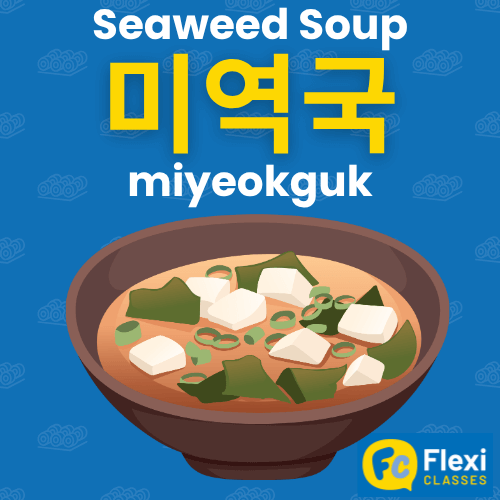
For instance, during birthdays, it’s customary to eat 미역국 (miyeokguk), a popular soup made with seaweed.
미역국 (miyeokguk) is also served to mothers for the first month after giving birth as it helps to nourish the body.
Next, many Koreans will prepare 전 (jeon), a pancake made with different vegetable or meat when visitors visit their homes to eat.
전 (jeon) was traditionally served as a must eat food during major holidays and for house guests and is still a popular practice today. A popular type of 전 (jeon) for guests is 애호박전 (eh-ho-bak jeon).
| Korean | Transliteration | Meaning |
|---|---|---|
| 애호박 | eh-ho-bak | zucchini |
| 전 | jeon | pancake |
✨Dining in Restaurants
When dining in a restaurant, many of the rules mentioned above apply. However, there are some additional elements to consider.
✨Ordering
In a group setting, it’s common to order several dishes to share. This might not be a common practice in Western culture, but Koreans enjoy sharing different meals. Be open to offer your food and share with others.
✨Handling the Bill
It’s customary for the person who invited others to pay the bill. If you’re in a group, consider offering to split the bill or treat someone as a gesture of goodwill. It is also common for the eldest in the group to treat the younger. So if you happen to be the oldest in the group, take the initiative to treat your friends with a good meal!
Learning Korean table etiquette is a great way to experience Korea’s cultural values and traditions.
By following these do’s and don’ts, you show respect to your Korean friends and fellow diners. So the next time you have the opportunity to dine with a Korean friend or their family, remember these do’s and don’ts.
Don’t forget to check out our Flexi Classes & our Korean Blog
👉 How to say Good Morning in Korean
Korean Table Manners | Quiz
👉 Have you correctly learned the Spanish vocabulary on this page?
Whether you knew some (or all) of them before reading this article, or on the contrary just learnt a bunch of them, take our quick fire quiz to see how well you remember them.
👉 Have a try right now and get immediate results:

Korean Table Manners | FAQ
What is Table Etiquette called in Korean?
식사예절 (Sik-sa ye-jeol)
식사 – meal
예절 – etiquette
How do you say delicious in Korean?
맛있다 (ma-sit-da) – delicious
맛있습니다 (ma-si-ssum-ni-da) – most formal
맛있어요 (ma-si-sseo-yo) – more formal
맛있어 (ma-ssi-seo) – casual
What are the most important Korean table manners to know as a foreigner?
Some of the most important rules include waiting for the eldest to start eating, using both hands when receiving items, and never sticking chopsticks upright in a bowl of rice.
Is it rude to refuse food or drink in Korea?
Yes, refusing food or drink- especially from an elder or host- can be seen as impolite. If you can’t accept, do so politely with an explanation or a soft refusal.
Is slurping noodles acceptable in Korea like it is in Japan?
Not really. Unlike Japan, loud slurping is generally frowned upon in Korea. It’s best to eat quietly and neatly.
Want More From LTL?
FANCY LEARNING KOREAN? Check out our online Korean courses here.
We offer a 7-day free trial to all online students where you can study Korean 24/7.
Want to study Korean in Korea instead? Our Korean courses in Seoul can either be taken in small groups of no more than 5 students or individually for a more tailored experience.
We even offer incredible homestay experiences in Seoul too.
It doesn’t end here, sign up to the newsletter for even more free resources and news from LTL ⬇️