

 Spanish
 Italian
 French
 Russian
 Japanese
 Korean
 Mandarin Simplified
 Mandarin Traditional
 Vietnamese
 Cantonese
 Shanghainese
 Taiwanese
Emperor’s Birthday in Japan: Traditions, Date & Celebrations
What is the Emperor’s Birthday in Japan?
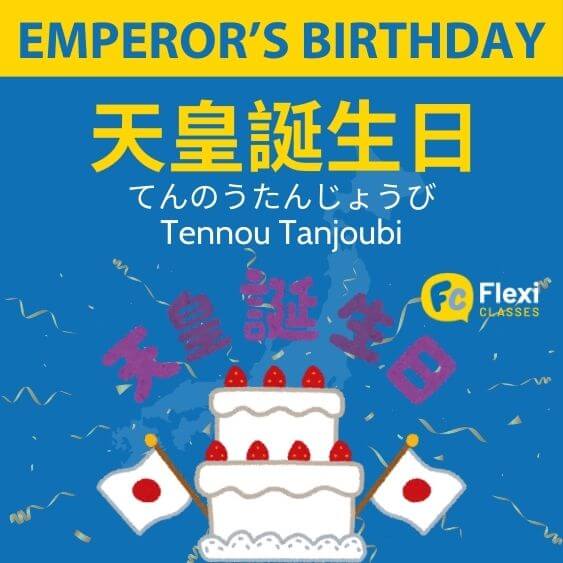
The Emperor’s Birthday 天皇誕生日 てんのうたんじょうび Tennou Tanjoubi is one of the most important national holidays in Japan.
👉 On this day, the birthday of the current Emperor is celebrated with various ceremonies and festivities.
It is a moment not only to express the respect and reverence that the Japanese people have for the Emperor, but also to unite the nation.
On the Emperor’s Birthday, the Imperial Palace is open to the public and foreigners are welcome to attend the ceremony. Attending a ceremony on the Emperor’s Birthday can be a more meaningful experience if you have a good knowledge of the event.
This article explores the history, traditions, and importance of the Emperor’s Birthday in modern Japan.
Emperor’s Birthday in Japan || What is the Emperor’s Birthday?
Emperor’s Birthday in Japan || The Day of the Emperor’s Birthday
Emperor’s Birthday in Japan || Birthdays of Successive Emperors
Emperor’s Birthday in Japan || Conclusion
Emperor’s Birthday in Japan || FAQs
Emperor’s Birthday in Japan || What is the Emperor’s Birthday?
The tradition of celebrating the Emperor’s birthday dates back to the Meiji period (1868-1912).
Although emperors existed prior to this period, their birthdays were not widely recognized or celebrated as national holidays. During the reign of Emperor Meiji, Japan rapidly modernized, and as it adopted Western customs, the culture of celebrating the monarch’s birthday also took root.
When the emperor changes, the emperor’s birthday is also changed to a new date.
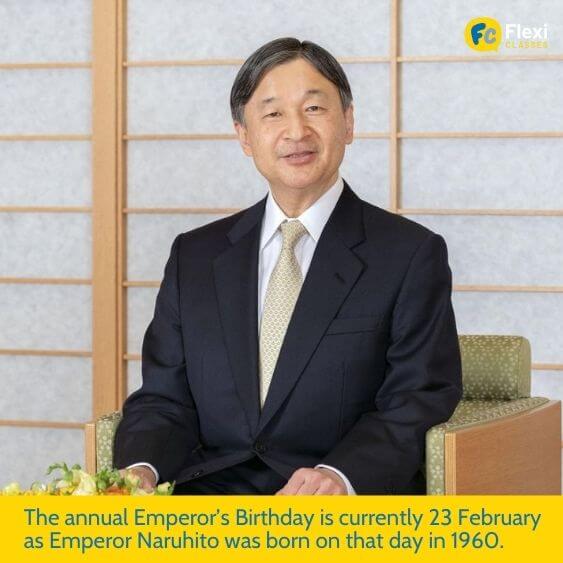
For example, when Emperor Akihito acceded to the throne in 1989, December 23 became the new Emperor’s birthday. However, when the current Emperor acceded to the throne on May 1, 2019, his birthday, February 23, became an official national holiday.
Emperors in history are called, for example, Emperor Showa, but these are all posthumous titles, which are called after their death in honor of their achievements.
Since the Meiji era (1868-1912), when there was a system whereby there could be only one era name for an emperor’s reign, it was decided to bestow the name of the era in honor of his achievements, and so the name is given as Emperor Meiji or Emperor Showa.
As for the epithets of earlier emperors, Ogai Mori and others have studied their origins, and it would be interesting for those who are interested to look them up.
Anyway, the Emperor is not referred to as Emperor Showa during his lifetime. This is because there is only one Emperor, so there is no need to add a proper name.
When referring to the reigning emperor, it is common to refer to him as 今上 きんじょう .
今 きん means present and 上 じょう ’ means above. Although the current era name is Reiwa 令和 れいわ , the current emperor is never referred to as such.
In ancient Japan, the emperor’s birthday was called Tencho-setsu 天長節 てんちょうせつ . It is said that the ceremony was first held in 775, during the reign of Emperor Kohnin 光仁天皇 こうにんてんのう .
The term is said to have originated from Emperor Xuanzong of the Tang Dynasty, who called the ceremony celebrating his birthday this way.
Ancient Japan actively learned about governance, social systems, and rituals from the Tang Dynasty and often sent envoys to gather information. It can be said that this ritual was also brought to Japan as part of such learning from the Tang Dynasty.
However, it had to wait until the Meiji period before the general public became aware of the Emperor’s birthday.
Things Not to Do in Japan 🙅♀️ Guide to Japanese Etiquette
Things Not to Do in Japan 🇯🇵 The ULTIMATE list of DON’Ts for your time in Japan and how to maintain perfect Japanese Etiquette
Emperor’s Birthday in Japan || The Day of the Emperor’s Birthday
One of the most notable aspects of the Emperor’s Birthday is that the Imperial Palace is open to the public.
This day is one of only two times a year that the gates of the Imperial Palace are open to the public (the other being New Year’s). Thousands of people, including Japanese citizens and foreign tourists, gather to see the emperor and the royal family.
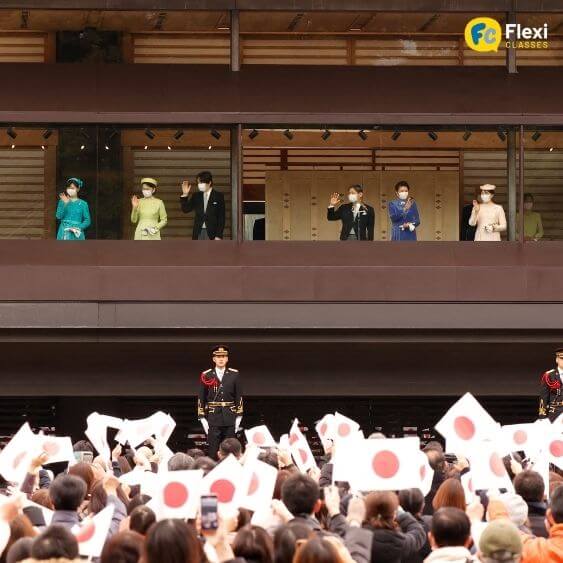
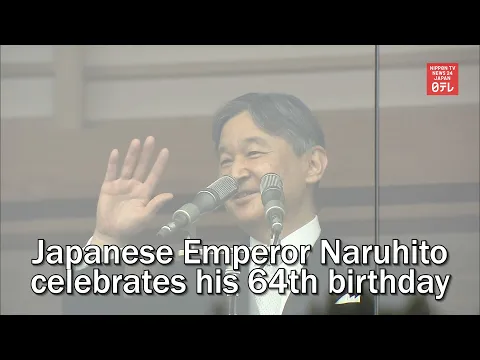
The Emperor appears on the balcony with the Empress and members of the Imperial Family and greets the crowd. Waving the Japanese flag, the crowd shouts Banzai!万歳 ばんざい to express their congratulations and respect for the Emperor. The Emperor usually gives a short speech of thanks and wishes for the happiness of the people.
Although the Emperor no longer has political power after World War II, his role as a symbol of unity remains important. The Constitution of Japan, enacted after World War II, defines the Emperor as “the symbol of the nation and national unity.” This symbolic role is embodied in his birthday, a day that emphasizes the connection between the imperial family and the people.
The opening of the Imperial Palace to the public on the Emperor’s Birthday serves as an opportunity to confirm this connection between the Imperial Family and the people.
Emperor’s Birthday in Japan || Birthdays of Successive Emperors
Emperor Meiji’s birthday was November 3. Today, this day is called “Culture Day” and is a national holiday. Thus, in most cases, the birthdays of emperors since the Meiji period have changed in form and are still national holidays today.
Emperor Taisho’s birthday was August 31, but October 31 was declared a national holiday because the height of summer interfered with ceremonies. This day is now a normal day.
In the Heisei era, the Emperor’s birthday was December 23, but the current Emperor’s birthday is February 23.
The COVID-19 pandemic affected many public events, including the Emperor’s Birthday celebrations; in 2020 and 2021, traditional public celebrations at the Imperial Palace were canceled to prevent the spread of the virus.
Instead, the Emperor addressed the public through video messages, expressing his thoughts on the challenges posed by the pandemic and his hopes for recovery and reconstruction.
These changes were necessary, but they also demonstrated the adaptability of the imperial system. The Emperor’s birthday remains an important day, albeit in a different form.
Omikuji || Interpret your fortune in traditional Japanese way
How to Read an Omikuji and Interpret Your Fortune Are you interested in fortune-telling? Omikuji ( おみくじ ) is a traditional Japanese practice of fortune telling that anyone can try in Shinto shrines (神社: Jinjya) or Buddhist temples (寺:…
Emperor’s Birthday in Japan || Conclusion
The Emperor’s Birthday is more than just a national holiday in Japan. It is a day that embodies respect for the nation’s traditions, continuity of the Imperial Family, and a sense of national unity.
As Japan continues to evolve, the Emperor’s Birthday remains a powerful symbol of the nation’s cultural heritage and hope for the future.
For those interested in Japanese culture and history, experiencing the Emperor’s Birthday is a rare opportunity to experience the deep values and customs that define Japan.
It would be interesting to learn Japanese and participate in imperial ceremonies when you come to Japan.
That’s all for today’s article. What do you think about Emperor’s Birthday? Tell us here!
Emperor’s Birthday in Japan || FAQs
When is the Emperor’s birthday now?
The Emperor’s birthday is February 23.
Since when is the Emperor’s Birthday a memorial day?
Although the Emperor’s birthday ceremony has been held since ancient times, it was not until the Meiji period that it became widely known as a national holiday.
What happens on the Emperor’s Birthday?
On the Emperor’s Birthday, the Imperial Palace is open to the public, a rare event that occurs only twice a year.
Why is the Imperial Palace open to the public?
The postwar emperor is considered by the Constitution to be the symbol of the Japanese nation and national unity. This event is held as an occasion to confirm the sense of unity between the Imperial Family and the people.
What is the “今上[きんじょう]” emperor?
The emperor currently in office is referred to as such. The era name is used as a posthumous title and is not called as such during the reign.
Want More From LTL?
WANT TO LEARN JAPANESE? Check out our online Japanese courses here.
We offer a 7-day free trial to all new students where you can study 24/7.
What about studying Japanese in Japan instead? We’ve got your back. Our Japanese courses in Tokyo can either be taken in small groups of no more than 5 students or individually for a more tailored experience.
We even offer incredible homestay experiences in Tokyo as well.
Come and be a part of this amazing community.