

 Spanish
 Italian
 French
 Russian
 Japanese
 Korean
 Mandarin Simplified
 Mandarin Traditional
 Vietnamese
 Cantonese
 Shanghainese
 Taiwanese
Showa Day in Japan: A Tribute to History and Reflection
Understanding Showa Day: Honoring Japan’s Past and Progress

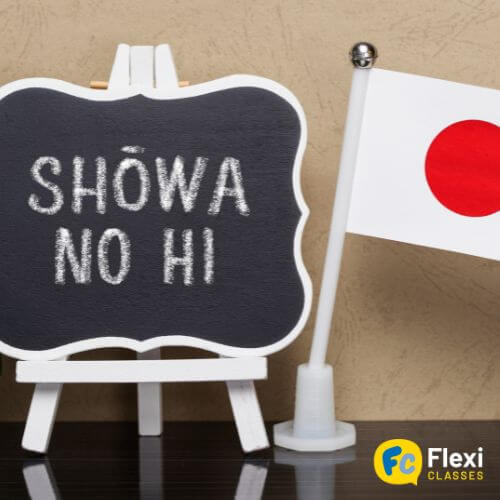
Showa Day 昭和の日 しょうわのひ , celebrated annually on April 29th in Japan, marks the birthday of Emperor Hirohito – 天皇裕仁 てんのうひろひと , posthumously known as Emperor Showa (昭和天皇 しょうわてんのう ).
While it is part of Japan’s Golden Week ゴールデンウィーク —a series of national holidays in late April and early May—it holds a deeper significance beyond being a day off for many.
Showa Day || The Origins of Showa Day
Showa Day || The Meaning of the Showa Day
Showa Day || Controversy over Showa Day
Showa Day || Significance of Showa Day Today
Showa Day || Showa Day in Pop Culture
Showa Day || Conclusion
Showa Day || FAQs

Showa Day || The Origins of Showa Day
The Showa era (1926-1989, 昭和時代 しょうわじだい ) was a period of tremendous change for Japan, encompassing the nation’s rise to militaristic power, its defeat in World War II (第二次世界大戦 だいにじせかいたいせん ), and its remarkable post-war recovery and economic growth (高度経済成長 こうどけいざいせいちょう ).
Emperor Hirohito, who reigned during this time, became a symbol of Japan’s turbulent history, embodying the country’s imperial ambitions as well as its eventual transformation into a peaceful and prosperous nation.
Showa Day was established in 2007, following years of debate about how to properly acknowledge this era in Japanese history. The holiday replaced Greenery Day – みどりの日 みどりのひ , which had previously been celebrated on April 29th to honor the emperor’s love for nature.
With the creation of Showa Day, the focus shifted toward reflecting on the lessons of the Showa era, particularly its wartime experiences and the subsequent recovery of the nation.
Showa Day || The Meaning of the Showa Day
The word Showa (昭和 しょうわ ) itself means enlightened peace or radiant harmony.This name, given to Emperor Hirohito’s era, holds a certain irony, as the early years of his reign were marked by military aggression and conflict.
However, after Japan’s defeat in World War II, the country embraced pacifism, rebuilding itself into a peaceful, democratic, and technologically advanced society.
Showa Day is not a day of celebration in the typical sense, but rather one of reflection.
It’s an opportunity for the Japanese people to look back on their nation’s history, both the good and the bad. It’s a time to remember the sacrifices (戦没者 せんぼつしゃ ) made during wartime, to reflect on the consequences of conflict, and to appreciate the peace that Japan has enjoyed since.
This day also encourages contemplation of how Japan can continue to contribute to global peace and stability, drawing on the lessons of its own history.
While the Showa period was complex and fraught with challenges, it ultimately laid the groundwork for the modern, peaceful Japan we know today.

How Do the Japanese Celebrate Valentine’s Day? || Find Out First
Valentine’s Day in Japan is quite different from the West. Let’s take a look at the big day, it’s history in Japan and also discover what White Day is too.
Showa Day || Controversy over Showa Day
Despite its focus on reflection, Showa Day has not been without controversy.
For some, Emperor Hirohito’s association with Japan’s militaristic past and wartime actions remains a sensitive issue. Critics argue that honoring his birthday could be seen as glorifying a period of imperial expansion and aggression, rather than focusing on the lessons learned from it.
However, supporters of Showa Day view it as an important opportunity to acknowledge and learn from history. They believe that the day provides a chance to reflect on the hardships endured during the Showa era and to foster a commitment to peace and harmony in the future.
As with many historical commemorations, the meaning of Showa Day is shaped by personal perspective. For some, it is a day of quiet remembrance, while for others, it serves as a reminder of how far Japan has come since its darkest days.
Showa Day || Significance of Showa Day Today

In today’s fast-paced, modern world, it can be easy to overlook the lessons of history (歴史の教訓 れきしのきょうくん – rekishi no kyoukun).
Showa Day provides a valuable reminder of the importance of learning from the past to build a better future.
Showa Day serves as a day for Japanese citizens to reflect on their shared history, to recognize the challenges their country has faced, and to recommit themselves to the ideals of peace and harmony.
Moreover, the holiday invites the younger generation to engage with their nation’s history. For many, the events of the Showa era may seem distant, but Showa Day ensures that the lessons of that period are not forgotten.
By reflecting on the hardships and triumphs of the past, Japan can continue to move forward as a peaceful, resilient nation.

Omikuji || Interpret your fortune in traditional Japanese way
How to Read an Omikuji and Interpret Your Fortune Are you interested in fortune-telling? Omikuji ( おみくじ ) is a traditional Japanese practice of fortune telling that anyone can try in Shinto shrines (神社: Jinjya) or Buddhist temples (寺:…
Showa Day || Showa Day in Pop Culture

While Showa Day is generally viewed as a day of quiet reflection, it also appears in popular culture. In films, television dramas, and novels, the Showa era is frequently depicted as a time of both hardship and hope.
Some period dramas focus on the struggles of the Japanese people during the war, while others highlight the determination and resilience of the post-war generation, emphasizing the period of rapid economic growth and technological innovation that followed.
For example, films like ”Grave of the Fireflies (火垂るの墓 ほたるのはか , Hotaru no Haka)” vividly portray the devastating impact of war on civilians, serving as a stark reminder of the consequences of conflict.
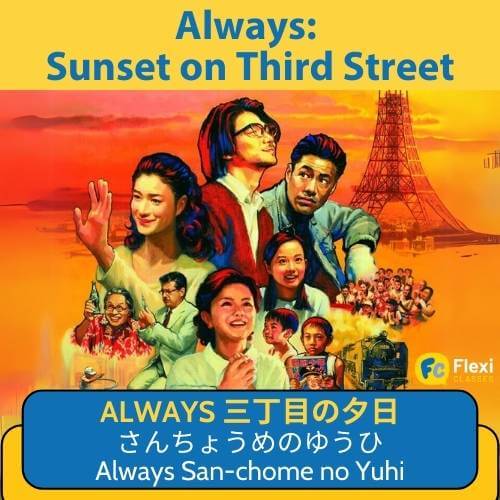
Conversely, works like ”Always: Sunset on Third Street (ALWAYS 三丁目の夕日 [さんちょうめのゆうひ], Always San-chome no Yuhi)” focus on the more optimistic aspects of the Showa era, highlighting the tight-knit communities and the hopeful spirit of the time.
These portrayals allow contemporary audiences to engage with the Showa period on an emotional level, deepening their understanding of the era’s significance.
Showa Day || Conclusion
As Japan continues to navigate its place in the 21st century, the lessons of the Showa era remain vital. Japan today faces new challenges—economic stagnation, an aging population, and shifting international alliances—that require the same resilience and adaptability shown by previous generations.
Showa Day, therefore, is not just about reflecting on the past but also about drawing inspiration from it.
By remembering the hardships endured and the perseverance required to rebuild the nation after the war, Showa Day can serve as a source of motivation for future generations.
It reminds them that even in the face of adversity, Japan has the strength to evolve and thrive, just as it did during the latter part of the Showa era.
In today’s complex global landscape, the message of Showa Day – of reflection, resilience, and the pursuit of peace – remains as relevant as ever. By understanding the lessons of the past, Japan can continue to contribute to a more peaceful and harmonious world, embodying the true meaning of the word “Showa.”
Visiting an Onsen in Japan // Which Onsen & What Should I Know
Visiting an onsen in Japan is an absolute must. Onsens are the natural hot springs in Japan and a big part of Japanese culture but what should you know?
What do you think about Showa Day? Share your thoughts here!
Showa Day || FAQs
When is Showa Day?
Showa Day is celebrated annually on April 29th in Japan.
What does Showa Day for?
It marks the birthday of Emperor Hirohito, also known posthumously as Emperor Showa.
What does Showa Day mean in modern-day life?
This day is part of Japan’s Golden Week, a string of national holidays that takes place in late April and early May.
Are there any ceremonies held on this day?
No, there is no special ceremony.
What does “Showa” mean?
The word “Showa(昭和[しょうわ])” itself means “enlightened peace” or “radiant harmony.”
Want More From LTL?
WANT TO LEARN JAPANESE? Check out our online Japanese courses here.
We offer a 7-day free trial to all new students where you can study 24/7.
What about studying Japanese in Japan instead? We’ve got your back. Our Japanese courses in Tokyo can either be taken in small groups of no more than 5 students or individually for a more tailored experience.
We even offer incredible homestay experiences in Tokyo as well.
Come and be a part of this amazing community.